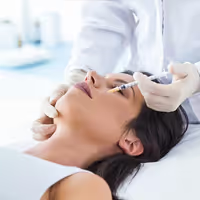
Why Fall Is the Best Time for Skin Resurfacing in Calgary
Freshly resurfaced skin and high UV are a bad combination. Here is why the calendar matters more than most people expect.
August 13, 2026

Quick answer: Freshly resurfaced skin is temporarily more sensitive to UV, and sun exposure during healing is the main cause of unwanted pigmentation afterward. Calgary’s UV index drops sharply from late September through March, which makes fall and winter the most forgiving window for resurfacing. Booking in September or October also means healing happens during a quieter social season, with refined results by the holidays.
Most people choose the timing of a skin treatment around their calendar: a gap in the work schedule, a stretch with no events, a week off. Reasonable, but it leaves out the factor that has the largest effect on the result.
Resurfacing treatments work by removing or disrupting the outer layers of skin so that fresh, more even tissue replaces them. During that renewal window, new skin is genuinely more vulnerable to ultraviolet light than it was before. Sun exposure in that period is the single most common reason people end up with patchy pigmentation after a treatment intended to even their skin out.
Which makes the season you book in a clinical variable, not just a scheduling preference.
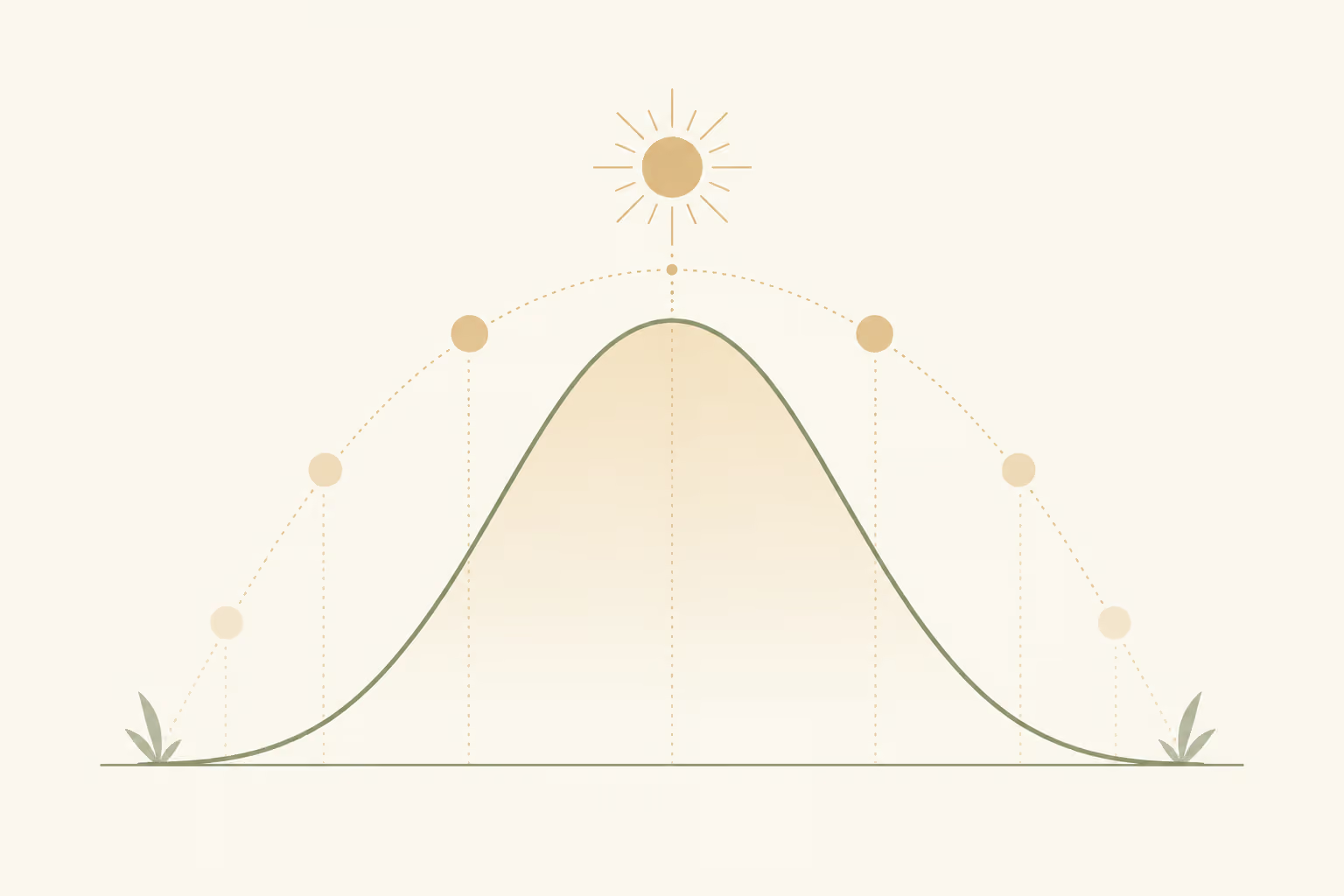
Calgary’s UV curve is steeper than people expect
Two local details matter here.
Summer UV is stronger than the temperature suggests. Calgary sits at roughly 1,045 metres. UV intensity rises with elevation, so a June afternoon here delivers more UV than the same afternoon in Toronto or Vancouver. The dry, thin air and long daylight hours compound it. Because it rarely feels oppressively hot, people routinely underestimate their exposure.
The drop after September is dramatic. From late September through March the sun sits much lower, daylight shortens considerably, and UV index readings fall to a fraction of their summer peak. That is a genuinely different healing environment.
There is one caveat worth knowing: snow reflects UV. A bright day in February with fresh snow on the ground bounces a meaningful amount of UV back up at your face. Winter is far more forgiving than July, but it is not a free pass, and daily sun protection still applies. We went through the formulation differences in chemical versus physical sunscreen.
The practical case for booking in fall
Healing lines up with less sun exposure. By late September you are naturally spending more time indoors, daylight is shorter, and the incidental exposure that undermines results simply drops away.
Downtime is easier to hide. Resurfacing involves a visible recovery period. Depending on the depth of treatment, expect redness and a sandpaper-like texture for several days, followed by flaking as the surface renews. Individual recovery varies. Fall and early winter are a quieter stretch socially for most people than midsummer, and layering, scarves, and shorter days make the healing phase considerably less conspicuous. Our post on NeoGen PSR safety and recovery covers what the days afterward actually look like.
Results have time to refine before the holidays. Resurfacing does not finish when the surface heals. Collagen remodelling continues for weeks to months afterward, so the skin keeps improving well past the visible recovery. A September or early October treatment generally means the initial healing is well behind you and results are refining by late November and December.
Summer pigmentation is at its most visible. Sun spots and uneven tone accumulate over summer and are usually at their most noticeable by September. That is when people most want to address them, and conveniently also when it is most sensible to.

A realistic timeline
For someone weighing this up in late summer, here is roughly how the sequence works:
August: Consultation and assessment. This is also when any preparatory skincare would begin, since some ingredients need several weeks of use before treatment and others need to be paused beforehand. Starting the conversation now is what makes an autumn treatment date possible.
September to October: Treatment. Visible recovery over the following days to a couple of weeks, depending on treatment depth.
October to December: Ongoing refinement as collagen remodelling continues. Skin tone and texture keep improving during this stretch.
Through winter: Maintenance, barrier support, and daily sun protection. Our winter skin care guide covers the barrier side, which matters a great deal in a chinook climate where humidity swings repeatedly.
If a series of treatments is appropriate for your concern, fall also gives you room to complete it before the following summer.
Which treatment, and how deep
Resurfacing is not one intensity.
NeoGen PSR uses nitrogen plasma to resurface and stimulate renewal. Because it can be delivered at different energy levels, it covers a range from a lighter refresh through to more substantial resurfacing for texture, acne scarring, fine lines, and uneven tone. Deeper settings mean more downtime and a stronger case for a low-UV season. We compared it with ablative lasers in NeoGen PSR versus CO2 laser, and looked specifically at scarring in NeoGen PSR for acne scars.
Plexr Shower is the gentler non-ablative option, with markedly less downtime. It is a reasonable choice year-round and a good fit if you want gradual improvement without a recovery window, though the same sun protection principles still apply.
For skin laxity rather than surface quality, Plexr Plus addresses a different concern and is often discussed alongside resurfacing during a consultation.
Which is appropriate depends on what is actually bothering you, how much downtime you can accommodate, and your skin’s history. That is a conversation, not a menu selection.
If you are reading this in spring
Fall is the most forgiving window, not the only one. Lighter, non-ablative treatments are reasonable year-round, and plenty of people have excellent outcomes from spring and summer treatments by being genuinely disciplined about sun protection.
The rule that actually matters is not the month. It is that whatever you invest in resurfacing needs to be protected afterward, and in a city with our UV load that requires deliberate effort rather than good intentions.
Thinking about resurfacing this fall? Book a consultation and we will look at your skin, talk through which treatment and depth suits your concern, and map out a timeline that fits your calendar. August is the right time to start that conversation for an autumn treatment date.
Frequently asked questions
Why does the season matter for skin resurfacing?
Newly resurfaced skin is temporarily more sensitive to ultraviolet light, and sun exposure during the healing period is the most common cause of uneven pigmentation afterward. Because UV levels in Calgary fall sharply from late September through March, treating during fall and winter means healing happens in a more forgiving environment.
Can I have resurfacing treatment in summer?
Yes, particularly lighter non-ablative treatments. It requires more discipline with sun protection and avoiding direct exposure while the skin heals. Deeper resurfacing is generally better scheduled outside the peak UV months.
How long is the recovery after NeoGen PSR?
It depends on the treatment depth. Expect redness and a rough, sandpaper-like surface texture for several days, followed by flaking as the skin renews. Individual recovery varies, and your practitioner will give you a specific expectation based on the settings used for your treatment.
When should I book if I want results by the holidays?
Starting the conversation in August and treating in September or early October generally allows visible healing to complete well beforehand, with results continuing to refine through November and December as collagen remodelling progresses.
Do I still need sunscreen in a Calgary winter?
Yes. The sun sits lower and UV is much weaker than in summer, but snow reflects UV back upward, which increases exposure to the face on bright winter days. Daily broad-spectrum protection remains important, particularly while skin is healing.
Last Updated:
August 13, 2026

Ready to Discuss Your Botox Treatment?
Book a consultation at our Calgary location to get a personalized treatment plan. Every face is different and yours deserves an approach that's tailored specifically to you.