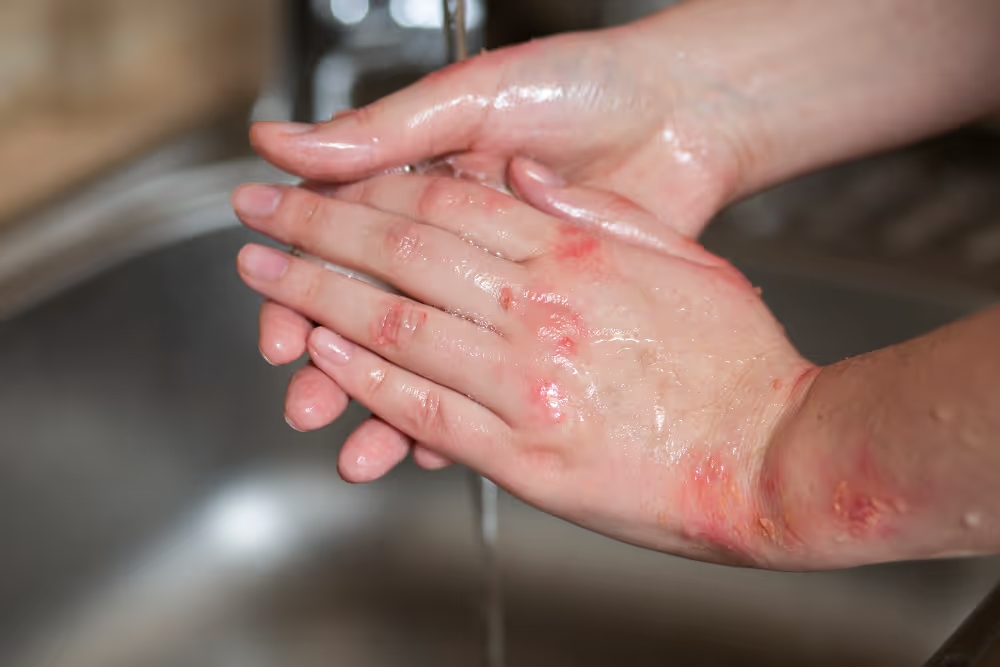
What Is Psoriasis?
Psoriasis is a chronic autoimmune condition that causes the body to produce new skin cells far too quickly. Normally, skin cells grow and shed over the course of about a month. With psoriasis, that cycle accelerates to just a few days, and the excess cells pile up on the surface, forming thick, raised patches known as plaques.
Psoriasis affects approximately 1 million Canadians and can appear at any age, though it most commonly develops between the ages of 15 and 35 or after age 50. It is not caused by poor hygiene and it is not contagious. It is an immune system condition with a strong genetic component.
The condition tends to cycle through flare-ups and periods of remission. During a flare, symptoms can range from mild and manageable to severe and disruptive. Beyond the physical discomfort, psoriasis can take a significant emotional toll. Many patients report that the visible nature of the condition affects their confidence and quality of life.
While there is no permanent cure for psoriasis, it is a treatable condition. Diagnosis and medical management belong with your family physician or a dermatologist, who can confirm the type and severity of what you have and prescribe treatment where it is needed.
Types of Psoriasis
There are several types of psoriasis, each with distinct characteristics. Many patients experience more than one type over the course of their lives.
Plaque psoriasis. This is the most common form, accounting for roughly 80 to 90% of cases. It appears as raised, inflamed patches covered with silvery-white scales. Plaques most often develop on the elbows, knees, lower back, and scalp, but they can appear anywhere on the body.
Guttate psoriasis. This type presents as small, drop-shaped spots on the skin and often appears suddenly, frequently after an infection such as strep throat. It is more common in children and young adults and may resolve on its own or develop into plaque psoriasis over time.
Inverse psoriasis. This form appears as smooth, bright red patches in skin folds, such as under the arms, beneath the breasts, or in the groin area. Because it occurs in areas prone to friction and moisture, it can be particularly uncomfortable.
Pustular psoriasis. This less common type produces white, pus-filled blisters surrounded by red or inflamed skin. It can be localized (often on the hands and feet) or widespread, and it sometimes requires urgent medical attention.
Scalp psoriasis. Psoriasis frequently affects the scalp, causing red, flaky, crusted patches that can extend beyond the hairline onto the forehead, neck, and around the ears. It can range from mild flaking to thick, stubborn plaques.
Signs and Symptoms
Psoriasis symptoms vary depending on the type and severity of the condition, but the most common signs include:
Thick, raised patches of skin. These plaques are the hallmark of psoriasis. They are often covered in silvery-white scales and can feel rough or dry to the touch.
Redness and inflammation. On lighter skin tones, psoriasis typically appears red or pink. On darker skin, it may present as darker patches with gray or silvery scaling, which can sometimes be mistaken for other conditions.
Itching, burning, or soreness. Many patients experience itching that ranges from mild to intense. Some also describe a burning or stinging sensation in affected areas, especially during active flares.
Dry, cracked skin that may bleed. During flare-ups, plaques can crack, particularly on the hands, feet, or joints, and may bleed. This increases the risk of secondary infection.
Nail changes. Psoriasis can affect the fingernails and toenails, causing pitting (small dents), discoloration, thickening, or separation of the nail from the nail bed.
Joint pain and stiffness. Some patients develop psoriatic arthritis, which causes swelling, pain, and stiffness in the joints. If you notice joint symptoms alongside skin changes, it is important to mention this to your physician.
Common Psoriasis Triggers
Understanding what triggers your flare-ups is one of the most useful tools for managing psoriasis. While triggers differ from person to person, the most commonly reported include:
Stress. Emotional stress is one of the most frequently cited triggers. Stress activates inflammatory pathways in the body that can worsen existing plaques or trigger new ones.
Infections. Upper respiratory infections, particularly strep throat, are a well-known trigger for guttate psoriasis. Any illness that activates the immune system can potentially provoke a flare.
Skin injury. Cuts, scrapes, sunburns, and even tattoos can trigger psoriasis at the site of the injury. This phenomenon is known as the Koebner response, and it is one of the most distinctive features of the condition.
Cold, dry weather. Calgary’s long winters and low humidity are particularly challenging for psoriasis patients. Cold air strips moisture from the skin, and indoor heating reduces humidity further. Both can worsen dryness and scaling.
Alcohol and smoking. Both alcohol consumption and tobacco use are associated with more severe psoriasis and reduced effectiveness of treatments. Reducing or eliminating these can make a meaningful difference for many patients.
Certain medications. Some drugs, including lithium, beta-blockers, antimalarial medications, and rapid withdrawal from systemic corticosteroids, can trigger or worsen psoriasis. Always inform your care team about your current medications.
Hormonal changes. Some patients notice their psoriasis worsening or improving around hormonal shifts such as puberty, pregnancy, or menopause.
Psoriasis and Cosmetic Treatment
Arlo Medical is a nurse-injector clinic offering cosmetic treatments. We do not diagnose or treat psoriasis. If you think you have psoriasis, or your psoriasis is not well controlled, the right first step is an assessment with your family physician or a dermatologist.
The Koebner response described above matters here. Because injury to the skin can trigger new psoriatic lesions at the site of that injury, we do not perform resurfacing or energy-based treatments on active psoriatic skin.
Some people whose psoriasis is stable and well managed also want to address skin texture or overall skin quality. Whether any cosmetic treatment is appropriate for you is a decision to make together with your physician, and we will ask about your psoriasis and your current treatment before proceeding with anything.
Everyday Skin Care That Helps
Regardless of treatment, these are the things that make the most consistent difference for psoriasis-prone skin:
- Trigger identification and avoidance. Understanding your personal flare patterns and minimizing exposure to known triggers.
- Gentle skincare. Psoriasis-friendly moisturizers and barrier-repair products that reduce dryness and scaling.
- Consistent moisturizing. This is particularly important during Calgary’s dry winter months.
- Lifestyle factors. Stress management, reducing alcohol, and quitting smoking are all associated with fewer and less severe flares.
- Physician follow-up. Ongoing review with your doctor so your treatment can be adjusted as your skin changes.
Results vary from person to person. Suitability, expected outcomes, and risks are reviewed at your consultation.
Other Concerns We Help With