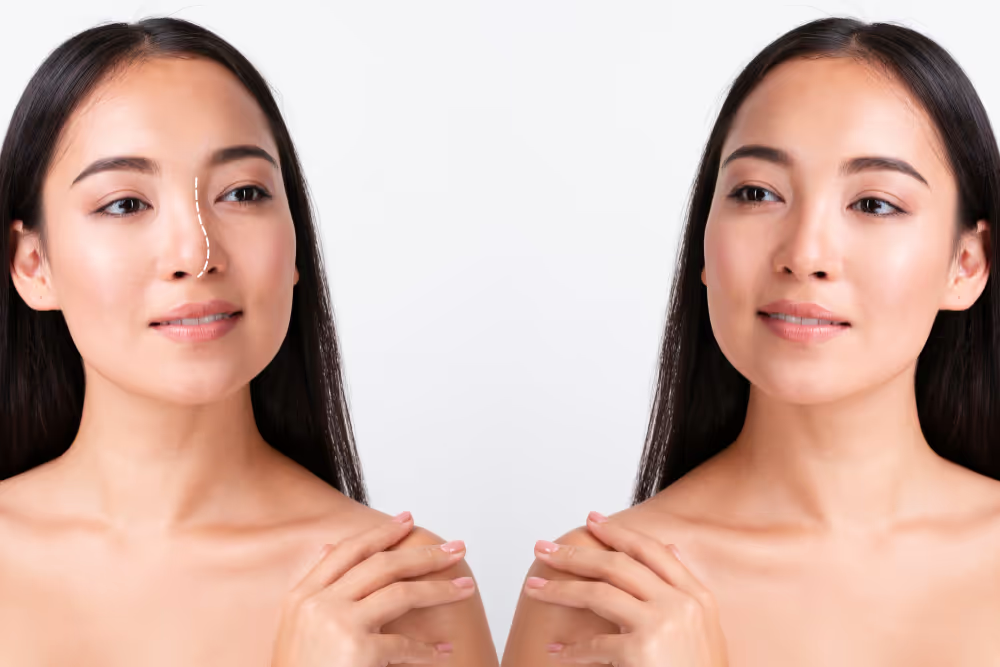
Almost nobody has a perfectly symmetrical face. One eyebrow sits a little higher, one cheek is slightly fuller, the smile lifts more on one side. Most of the time this is completely normal. Sometimes it becomes more noticeable with age, and occasionally it is a sign of something that needs a doctor. This page explains the difference, what causes an uneven face, and the cosmetic options we can discuss at our medical spa in Calgary.
What Is Facial Asymmetry?
Facial asymmetry means the left and right sides of the face do not match. The difference can be in bone structure, in the soft tissue and fat over it, in how the muscles move, or in the skin itself. Slight asymmetry is the rule rather than the exception. Studies of facial proportions consistently find that the two halves of almost every face differ in small, measurable ways, and that is part of what makes a face look natural rather than artificial.
It is worth separating three kinds, because they respond to different things:
- Structural: differences in the jaw, cheekbones, or chin. Usually present from birth or adolescence.
- Soft tissue: one side has more or less volume, or has sagged more. Often becomes more visible with age or weight change.
- Dynamic: the face looks even at rest but uneven when you smile, talk, or raise your eyebrows, because the muscles on each side work differently.
What Causes Facial Asymmetry?
- Genetics and development: most asymmetry is simply how the face grew. Bone, muscle, and fat develop slightly differently on each side.
- Ageing: volume loss, bone change, and skin laxity rarely happen evenly, so a small difference in your twenties can be more obvious in your forties.
- Habits: chewing mostly on one side, or always sleeping on the same side, is often blamed. The evidence that these cause lasting change is limited, though some people notice a difference in skin creasing on their sleeping side.
- Sun exposure: the side of the face that gets more sun, such as the driver's side, can show more sun damage and laxity.
- Injury or dental work: trauma, fractures, tooth loss, or orthodontic changes can alter the structure on one side.
- Medical conditions: Bell's palsy, stroke, nerve injury, and some congenital conditions cause weakness or changes on one side of the face.
When to See a Doctor First
Long-standing asymmetry that has changed slowly over years is usually cosmetic. A change that is sudden or new is different.
- Call 911 immediately if one side of the face suddenly droops, especially with arm weakness, slurred speech, or confusion. These are warning signs of a stroke.
- See a physician promptly if facial weakness develops over hours or days, if you cannot fully close one eye, or if the asymmetry comes with pain, numbness, swelling, or a lump.
We work only on the cosmetic appearance of facial asymmetry. We do not diagnose or treat medical causes, and if anything in your history suggests one, we will ask you to see your physician before we discuss treatment.
Is My Face Really Uneven?
Often it looks more uneven to you than to anyone else. Front cameras flip your image and use wide-angle lenses that distort the features closest to the lens, and a mirror shows you a reversed face you are used to but others never see. Lighting from one side exaggerates every small difference. If you want an honest view, look at a photo taken by someone else from a normal distance in even, front-on light.
Cosmetic Options for an Uneven Face
Where the concern is cosmetic, the aim is to soften the difference between the two sides, not to create a mirror-image face. A perfectly symmetrical result tends to look unnatural. These are the options we can discuss:
- Dermal Fillers: hyaluronic acid filler can add volume to the flatter side, for example in the cheek, chin, or jawline, to balance soft tissue differences. Results are visible right away and can be adjusted or dissolved if needed.
- Sculptra: a collagen-stimulating injectable that restores volume gradually over a series of sessions. It can suit broader volume differences across one side of the face. Our guide to Sculptra vs dermal fillers explains how the two compare.
- Visage Excellence Thread Lift: repositions soft tissue that has sagged more on one side. It lifts rather than adding volume, and is sometimes combined with filler.
Non-surgical treatment works best on soft tissue asymmetry. It can make structural differences less noticeable, but it does not change the underlying bone. For pronounced structural asymmetry, options such as orthognathic surgery, facial implants, or fat transfer are carried out by surgeons, and we are happy to talk through what a referral pathway might look like.
What to Expect at a Consultation
We look at your face at rest and in movement, from the front and in profile, because many people's asymmetry only shows when they smile or talk. We ask about your history, including any sudden changes, previous treatment, and dental or orthodontic work. Then we explain which kind of asymmetry you have, whether a cosmetic treatment can help, and what is realistic. Our guide to your first injectable consultation covers the appointment in more detail.
Further Reading
Other Concerns We Help With
Contact Arlo Medical Injections About Facial Asymmetry
If an uneven face is bothering you, our injectors can assess it and tell you honestly what will and will not help. Call us at (825) 736-2756 or book a complimentary consultation online. Results vary from person to person. Suitability, expected outcomes, and risks are reviewed at your consultation.