NeoGen PSR Safety and Side Effects: What to Expect and How to Recover Well
What is normal, what is rare, who should avoid treatment, and how to support a smooth recovery.
July 4, 2026
Quick answer: NeoGen PSR is a non-surgical plasma treatment with a well-tolerated safety profile. Because it keeps the outer layer of skin intact rather than removing it, most side effects are mild and temporary: warmth, redness, swelling, bronzing, and crusting that settle within about a week. Temporary darkening of the skin is possible, especially in deeper skin tones, and true complications are uncommon. It is not suitable during pregnancy, soon after isotretinoin, or for those prone to keloid scarring.
If you are considering NeoGen PSR, it is natural to want to know what recovery involves and how safe the treatment is. The reassuring news is that plasma skin regeneration has a well-studied, well-tolerated profile, and most side effects are mild and short-lived.
This guide explains what to expect after treatment, which reactions are normal, which are rare, who should avoid the treatment, and how to support a smooth recovery. For an overview of the treatment itself, see NeoGen PSR at Arlo Medical in Calgary.
Why NeoGen PSR Is Considered Lower-Risk
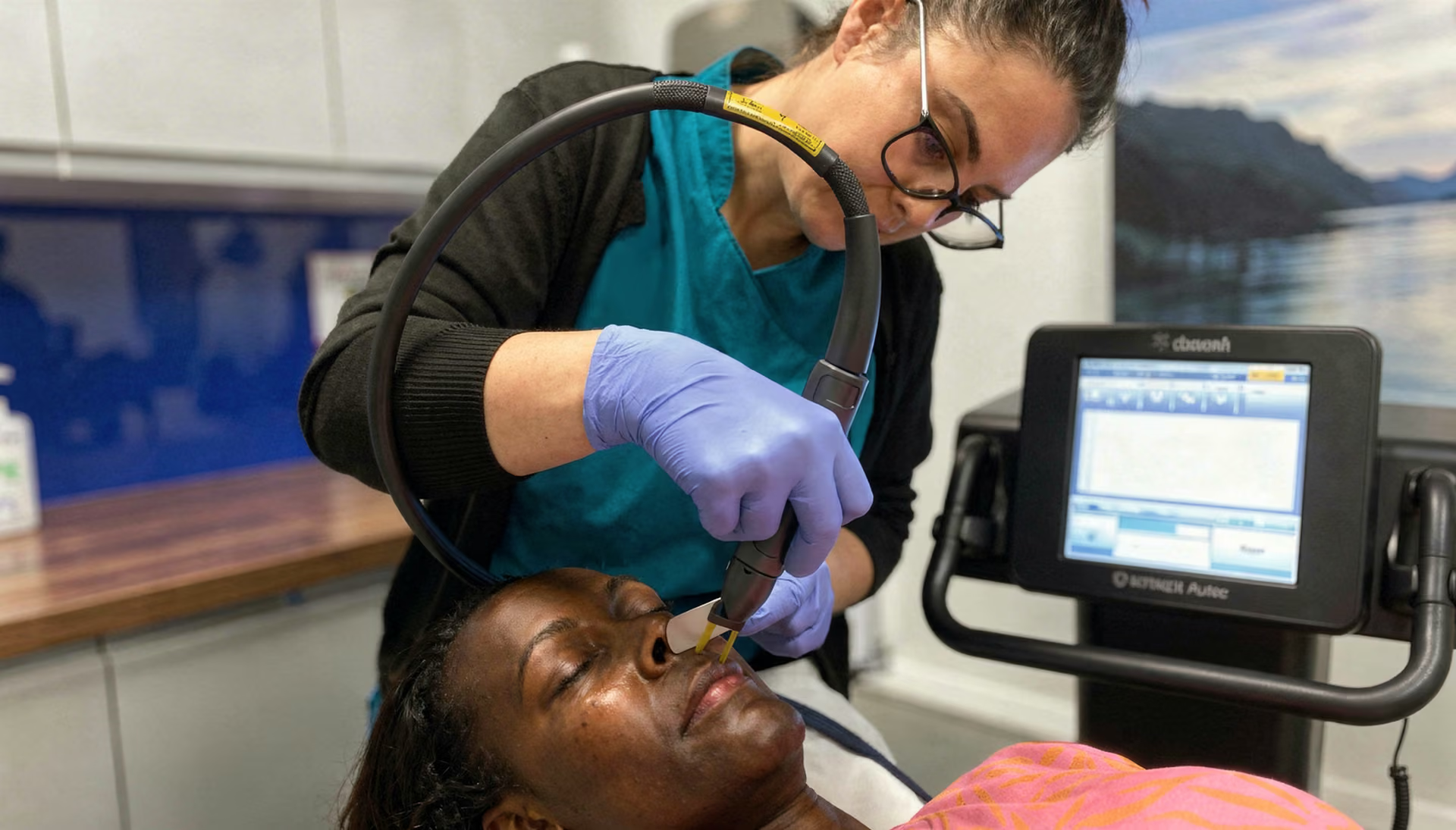
NeoGen PSR uses nitrogen plasma energy to resurface the skin and stimulate collagen. Its key safety advantage is that it does not vaporize or remove the outer layer of skin the way an ablative CO2 laser does. Instead, the treated surface stays in place as a natural protective dressing while new skin forms underneath.
This matters because keeping the epidermis intact is associated with less downtime and a lower risk of significant complications. In an animal-model comparison, the zone of thermal injury from a single plasma pass was under 11 micrometers, compared with roughly 33 micrometers for a high-energy CO2 laser (Fitzpatrick et al., 2008). Less collateral heat means a gentler recovery.
Common Side Effects (What's Normal)
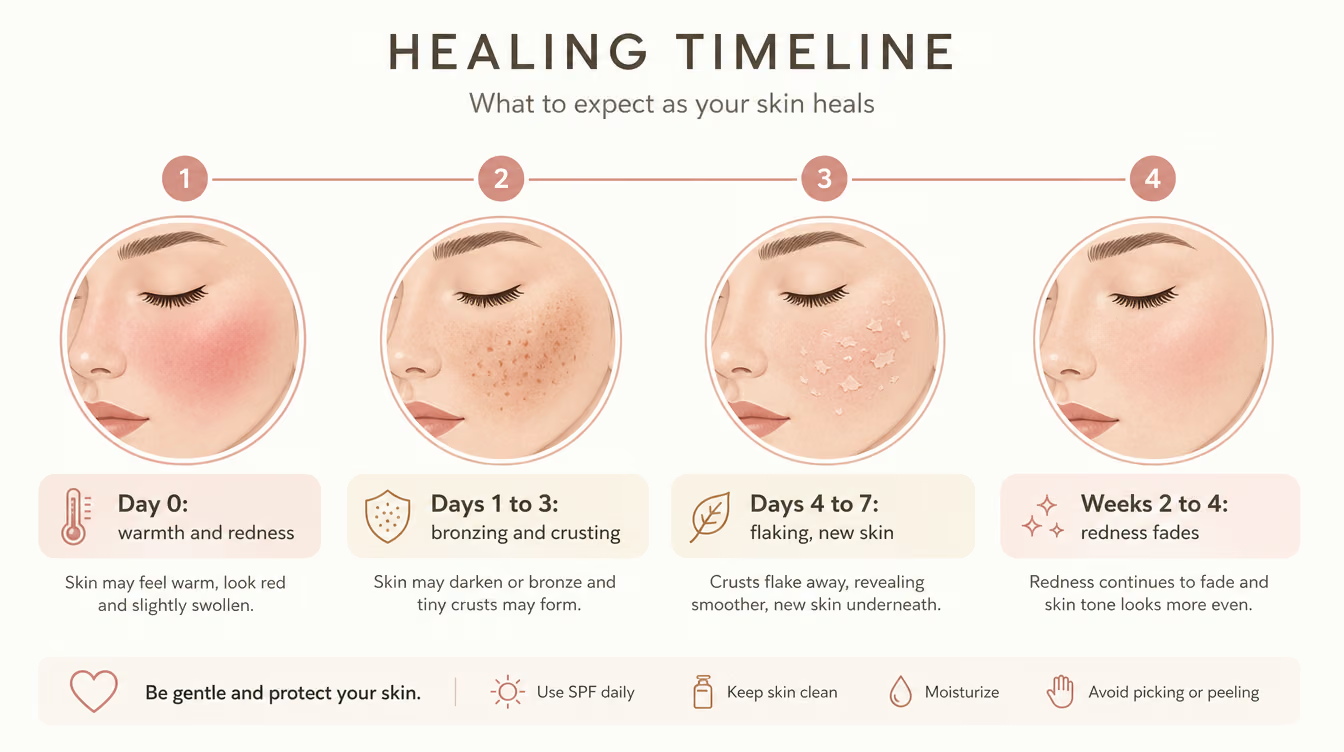
Most people experience a predictable set of temporary effects as the skin heals:
- Warmth and a sunburn-like feeling immediately after treatment.
- Redness and mild swelling for the first few days.
- A bronzed appearance and fine crusting as the treated surface dries and prepares to shed.
- Flaking or peeling as the old surface comes away and new skin appears underneath.
- Temporary dryness or tightness during healing.
In studies, the skin typically re-surfaces within about 4 to 7 days depending on the energy level used, faster for low-energy rejuvenation and a little longer for higher-energy sessions (Bogle et al., 2007; Kono et al., 2009).
Less Common Side Effects and Risks
- Temporary hyperpigmentation (darkening), which is more likely in medium to deeper skin tones. In one study it occurred in 4 of 20 patients and resolved within 3 months (Kono et al., 2009).
- Prolonged redness that can linger a few weeks in some people.
- Infection, which is rare and largely preventable with good aftercare (none occurred in the Kono study).
Reassuringly, that same study reported no hypopigmentation (lightening) and no worsening of scarring, and other plasma research has reported similarly low complication rates when treatment is performed appropriately.
Is NeoGen PSR Painful?
A topical numbing cream is applied before treatment to keep it comfortable. You will feel warmth and a stinging sensation with each pulse. Comfort varies with the energy level and the area treated, but treatments are generally well tolerated (Kono et al., 2009).
Who Should Avoid NeoGen PSR
NeoGen PSR is not appropriate for everyone. It is generally not recommended if you:
- Are pregnant or breastfeeding
- Have used isotretinoin (Accutane) within the past 6 to 12 months
- Have an active skin infection or breakout in the treatment area
- Have a history of keloid scarring
- Have a deeper skin tone (Fitzpatrick V to VI), due to a higher risk of pigment changes
A consultation and skin assessment before treatment is the best way to confirm you are a suitable candidate and to tailor the energy level to your skin type.
How to Minimize Side Effects
Good aftercare has a big influence on both comfort and results:
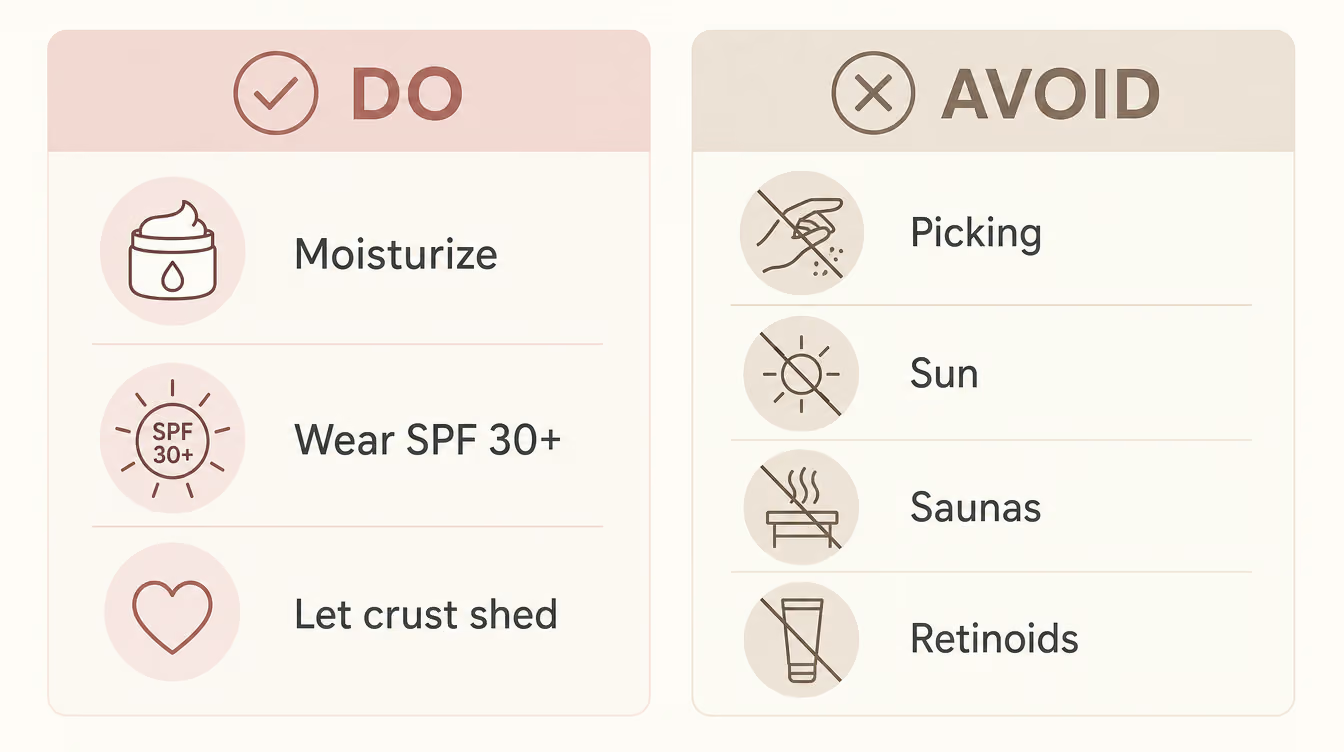
- Keep the area clean and moisturized with a gentle, fragrance-free product.
- Do not pick, scratch, or peel the crust; let it shed on its own.
- Apply broad-spectrum SPF 30 or higher daily once healing begins, and avoid direct sun for at least 4 weeks. Sun exposure is the main driver of post-treatment pigmentation.
- Avoid saunas, hot yoga, and intense sweating for the first week.
- Pause retinoids and exfoliating acids for about 2 weeks.
When to Contact the Clinic
Most reactions are expected and resolve on their own. Contact your provider if you notice signs outside the normal healing process, such as spreading redness or warmth, increasing pain after the first few days, pus or other signs of infection, or blistering. Prompt follow-up lets any issue be addressed early, and your Arlo Medical injector is available to guide you through recovery.
Frequently Asked Questions
How long do NeoGen PSR side effects last?
Most side effects settle within about a week. Bronzing and crusting typically resolve in 4 to 7 days, while some redness can linger for a few weeks. Any temporary pigment change usually fades over a few months.
Is NeoGen PSR suitable for deeper skin tones?
Plasma is gentler on pigment than aggressive ablative lasers, but medium to deeper skin still carries a higher risk of temporary hyperpigmentation. Fitzpatrick I to IV generally respond best. A consultation will determine whether it is appropriate for your skin and at what energy level.
Does NeoGen PSR cause scarring?
Scarring is very uncommon. In published plasma research, no worsening of scarring or new scarring was reported, largely because the treatment preserves the outer skin layer. Following aftercare instructions further reduces any risk.
How soon can I return to normal activities?
Many people return to daily routines within a few days, timing more visible plans around the 4 to 7 day shedding phase. Makeup can usually be worn again once the skin has finished flaking, as advised by your injector.
Related Reading
- NeoGen PSR at Arlo Medical
- NeoGen PSR for Acne Scars: Results & Timeline
- NeoGen PSR vs CO2 Laser: How They Compare
- Uneven Skin Texture
References:
- Kono, T., et al. (2009). Treatment of Traumatic Scars Using Plasma Skin Regeneration (PSR) System. Lasers in Surgery and Medicine, 41(2), 128-130.
- Bogle, M.A., Arndt, K.A., & Dover, J.S. (2007). Evaluation of Plasma Skin Regeneration Technology in Low-Energy Full-Facial Rejuvenation. Archives of Dermatology, 143(2), 168-174.
- Fitzpatrick, R., et al. (2008). A Histopathologic Evaluation of the Plasma Skin Regeneration System versus a Standard Carbon Dioxide Resurfacing Laser in an Animal Model. Lasers in Surgery and Medicine, 40(2), 93-99.
Last Updated:
July 1, 2026


Ready to Discuss Your Botox Treatment?
Book a consultation at our Calgary location to get a personalized treatment plan. Every face is different and yours deserves an approach that's tailored specifically to you.