NeoGen PSR vs CO2 Laser: How Two Skin Resurfacing Treatments Compare
How nitrogen plasma resurfacing and fractional CO2 laser differ in mechanism, downtime, results, and who each one suits.
June 29, 2026

Quick answer: NeoGen PSR uses nitrogen plasma energy to resurface the full skin surface while keeping the outer layer intact as a natural dressing, which means a more controlled recovery than ablative CO2 laser. CO2 laser vaporizes microscopic columns of tissue and can treat deeper concerns in fewer sessions, but with longer downtime and higher pigment risk on darker skin. NeoGen PSR is Arlo Medical's plasma resurfacing option in Calgary.
If you have been researching skin resurfacing in Calgary, two names come up again and again: NeoGen PSR and fractional CO2 laser. Both improve skin texture, tone, fine lines, and scarring by prompting the skin to rebuild itself, but they use completely different technology and involve very different recovery experiences.
This guide explains how each treatment works, how they compare on downtime, results, and safety, and how to think about which one fits your skin. At Arlo Medical in Calgary, we offer NeoGen PSR as our plasma resurfacing treatment, so we will be clear about where each option has the edge.
What Is NeoGen PSR?
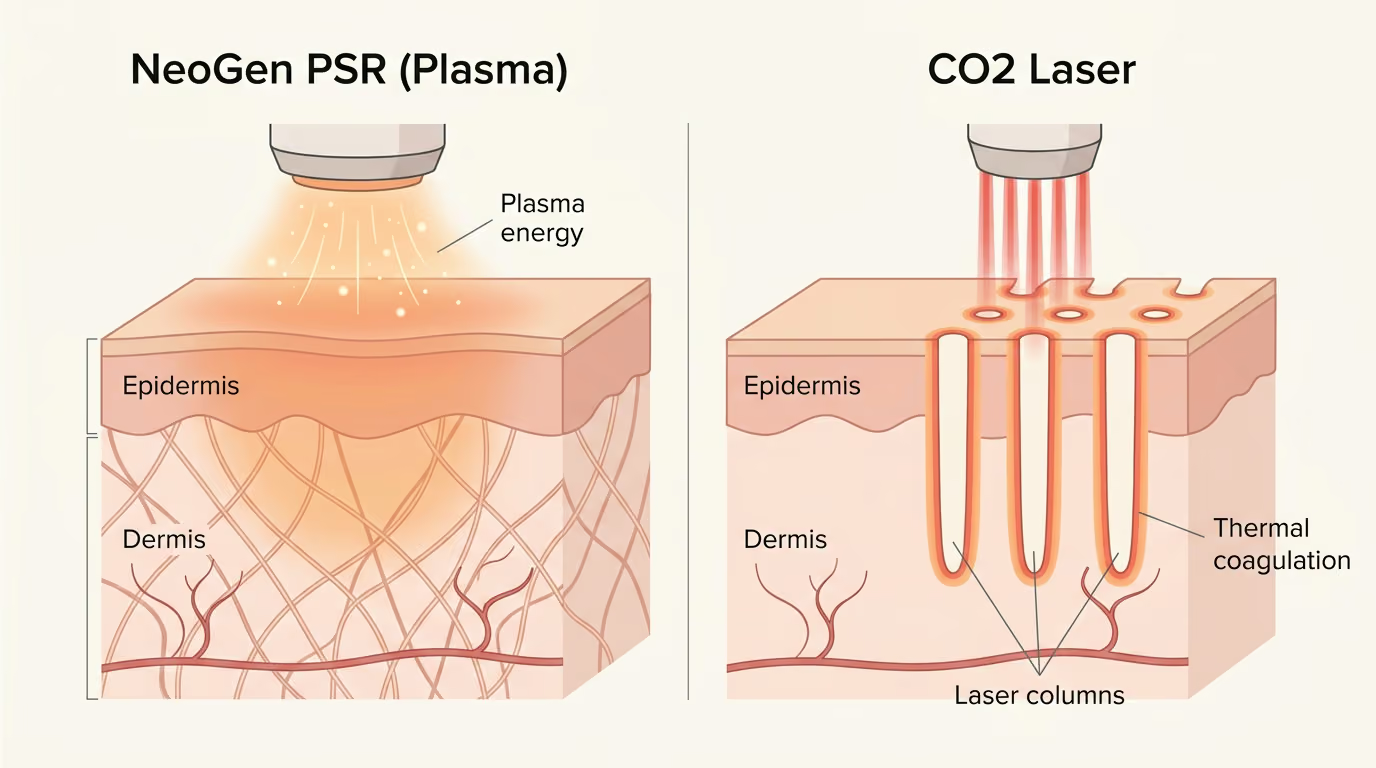
NeoGen PSR (Plasma Skin Regeneration) uses nitrogen plasma energy rather than light. A handpiece converts nitrogen gas into plasma and delivers it to the skin in controlled pulses, heating both the surface and the deeper dermis at once. This triggers a natural wound-healing response that rebuilds collagen and resurfaces the skin over the following months.
A defining feature of NeoGen PSR is that it does not vaporize or remove the outer layer of skin. The treated epidermis stays in place as a natural protective dressing while new skin forms underneath, then sheds gradually. This is the main reason its recovery tends to feel more controlled than ablative laser.
What Is CO2 Laser Resurfacing?
Carbon dioxide (CO2) laser resurfacing uses a focused beam of light at a 10,600 nanometer wavelength that is absorbed by water in the skin. This vaporizes microscopic columns of tissue, removing damaged skin and prompting the body to generate new collagen as it heals.
Most modern CO2 treatments are fractional, meaning the laser treats a fraction of the skin in a grid of tiny channels and leaves the surrounding tissue intact to speed healing. CO2 laser is powerful and can address deeper textural concerns, often in fewer sessions, but because it removes skin tissue the recovery involves open micro-wounds.
How They Work: Plasma vs Light
The core difference is the energy source and what it does to the skin. NeoGen PSR delivers thermal energy through plasma across the entire skin surface without ablating it, so healing happens beneath an intact layer. CO2 laser delivers light energy that ablates, or vaporizes, targeted columns of tissue, so healing happens as those channels close.
Both stimulate collagen remodeling, which is what drives the long-term improvement in texture and firmness. They simply take different paths to get there.
NeoGen PSR vs CO2 Laser at a Glance
- Technology: NeoGen PSR uses nitrogen plasma; CO2 laser uses 10,600 nm light.
- Skin removal: NeoGen PSR leaves the outer layer intact as a dressing; CO2 laser ablates micro-columns of tissue.
- Best for: NeoGen PSR suits overall texture, tone, fine lines, and diffuse scarring; CO2 laser suits deeper wrinkles and more advanced textural damage.
- Downtime: NeoGen PSR typically 5 to 7 days of visible healing; CO2 laser often 7 to 14 days, with more lingering redness.
- Sessions: NeoGen PSR is usually a series of treatments; CO2 laser can achieve more in a single deeper session.
- Comfort: Both use topical numbing, and both involve heat and a stinging sensation during treatment.
- Skin tone: Both are best for lighter to medium tones; aggressive CO2 carries higher pigment risk on darker skin.
Downtime and Recovery
This is where most patients feel the biggest practical difference. With NeoGen PSR, the skin looks bronzed and forms a fine crust that flakes away naturally over 5 to 7 days, with the intact surface acting as a built-in barrier during healing. With fractional CO2 laser, the ablated channels mean more oozing, swelling, and a longer period of redness, often 1 to 2 weeks of social downtime with pinkness that can linger for weeks.
Neither is a no-downtime treatment, but NeoGen PSR is generally the gentler recovery for people who cannot take extended time away.
Results: What to Expect
Both treatments produce gradual improvement as new collagen forms, with results building over three to six months. CO2 laser can deliver more dramatic change in a single deeper session because it removes more tissue, which is an advantage for advanced sun damage or deep wrinkles. NeoGen PSR builds comparable improvement in overall texture and tone across a series of treatments, with a healing experience many patients find easier to fit into their lives (Bogle et al., 2007).
Skin Tone and Safety Considerations
Any resurfacing treatment that creates heat in the skin carries some risk of post-inflammatory hyperpigmentation, particularly for medium to darker skin tones. Both NeoGen PSR and CO2 laser are best suited to lighter and medium skin (Fitzpatrick I to IV), and high-energy ablative CO2 in particular requires caution on darker skin. A consultation and skin assessment is essential before either treatment to match the approach to your skin type. NeoGen PSR is not suitable during pregnancy or breastfeeding, or shortly after isotretinoin (Accutane) use.
Which Treatment Is Right for You?
As a general guide:
- Consider NeoGen PSR if your priority is overall skin texture, tone, fine lines, mild to moderate scarring, and a more manageable recovery.
- Consider CO2 laser if you have deeper wrinkles or more advanced textural damage and are willing to accept longer downtime for a more aggressive single treatment.
The right choice always depends on your specific concern, skin type, and how much recovery time you can accommodate. Many concerns can be treated well by either, and the deciding factor is often downtime tolerance and skin tone.
NeoGen PSR at Arlo Medical in Calgary
Arlo Medical offers NeoGen PSR as our plasma skin resurfacing treatment for concerns like uneven skin texture, fine lines and wrinkles, and acne scarring. We do not offer CO2 laser, so if you are weighing resurfacing options, the best next step is a consultation where we assess your skin and recommend the most appropriate treatment for your goals.
Book a complimentary consultation to talk through your skin concerns and build a personalized plan.
Frequently Asked Questions
Is NeoGen PSR the same as a laser?
No. NeoGen PSR uses nitrogen plasma energy, not light. A laser uses a specific wavelength of light to target the skin, while plasma delivers heat across the full surface without vaporizing the outer layer.
Which has less downtime, NeoGen PSR or CO2 laser?
NeoGen PSR generally has a shorter, more contained recovery, around 5 to 7 days of visible healing, because the outer skin stays intact as a natural dressing. Fractional CO2 laser usually involves 1 to 2 weeks of social downtime with more lingering redness.
Does CO2 laser give better results than NeoGen PSR?
CO2 laser can produce more dramatic change in a single deeper session and may be preferred for advanced wrinkles or sun damage. NeoGen PSR builds comparable improvement in texture and tone over a series of sessions with an easier recovery. The better option depends on your concern and how much downtime you can take.
Can these treatments be used on darker skin tones?
Both are best suited to lighter and medium skin tones (Fitzpatrick I to IV). Darker skin types face a higher risk of pigment changes, especially with aggressive CO2 laser. A consultation will determine the safest approach for your skin.
Does Arlo Medical offer CO2 laser?
Arlo Medical offers NeoGen PSR plasma resurfacing rather than CO2 laser. During your consultation we can explain how NeoGen PSR would address your specific concern and whether it is the right fit.
Related Reading
- NeoGen PSR at Arlo Medical
- NeoGen PSR for Acne Scars: Results & Timeline
- Uneven Skin Texture
- Fine Lines and Wrinkles
References:
- Bogle, M.A., et al. (2007). Evaluation of Plasma Skin Regeneration Technology in Low-Energy Full-Facial Rejuvenation. Archives of Dermatology, 143(2), 168-174.
- Omi, T., & Numano, K. (2014). The Role of the CO2 Laser and Fractional CO2 Laser in Dermatology. Laser Therapy, 23(1), 49-60.
Last Updated:
June 25, 2026



Ready to Discuss Your Botox Treatment?
Book a consultation at our Calgary location to get a personalized treatment plan. Every face is different and yours deserves an approach that's tailored specifically to you.