Plexr Recovery: What the Two Weeks After a Plasma Treatment Actually Look Like
The scabs are supposed to be there. Here is what each stage of Plexr healing looks like, what genuinely helps, and the few things that need a phone call.
September 1, 2026

Quick answer: Recovery from a Plexr treatment follows a predictable pattern. Small carbon scabs form over each treated point immediately and fall away on their own within five to seven days. Swelling is most noticeable for the first three days, particularly around the eyes. Once the scabs are gone the new skin underneath can stay pink for up to four weeks. Keep the area dry for four days, never pick the scabs, and wear sunscreen several times a day for at least 30 days. Most people carry on with normal daily activities throughout.
The most common question about a Plexr treatment is not how it works or what it costs. It is some version of "how bad do I look afterwards, and for how long."
It is a fair question, and it deserves a straight answer. Plexr is not a no-downtime treatment. Small dark scabs form over the treated area and stay visible for the better part of a week. That is not a complication. It is how the treatment works, and it is the reason the results last as long as they do.
What follows is what each stage of healing actually looks like, what helps, what to avoid, and the small number of signs that warrant a phone call. It is general guidance rather than a substitute for the specific instructions you are given at your own appointment, which will vary depending on which area was treated.
Why There Are Scabs at All
The Plexr plasma arc works by creating a fine discharge between the device probe and the skin surface. The probe never touches the skin and nothing is cut. At each point of contact the treated tissue sublimates, which causes the skin to contract immediately, while the tissue around and beneath it is left intact.
Each of those points then forms a tiny carbon crust. Those crusts are the body's own dressing. They protect the new skin forming underneath while it re-epithelialises, which is exactly why picking them off is the single worst thing you can do.
Underneath, a slower process is running. The controlled injury signals the body to lay down new collagen in the treated area, and that is what continues to firm and tighten the skin over the following weeks and months. The immediate contraction is the part you see on day one. The collagen is the part you see at week eight.
The Recovery Timeline, Stage by Stage
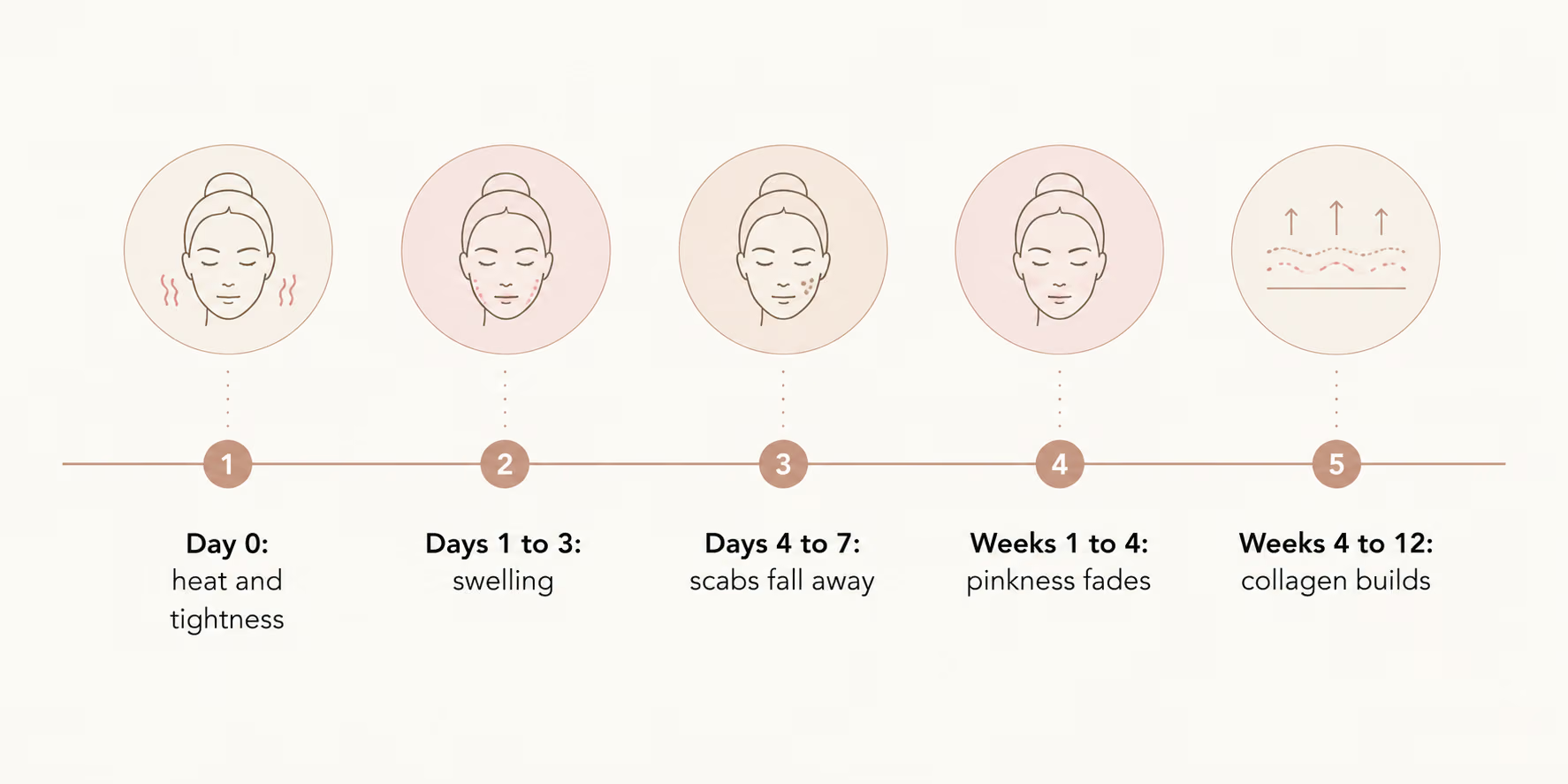
Day 0, the day of treatment. Topical numbing cream goes on about 45 minutes beforehand, and the treatment itself takes 10 to 40 minutes depending on the area. Afterwards the skin feels hot and tight, similar to a sunburn, and the small dark dots are visible right away. Swelling starts to build within a few hours.
Days 1 to 3, the swelling window. This is the most noticeable phase, especially around the eyes, where swelling is often worst first thing in the morning and settles through the day. Sleeping with your head slightly elevated helps. The treated area may feel tight and itchy. This is also the stage people find most surprising, because the swelling can peak a full day after treatment rather than immediately.
Days 4 to 7, the scabs come away. The crusts dry, darken, and begin lifting at the edges. They fall off on their own, usually a few at a time rather than all at once, which means there is a day or two where the area looks patchy. Resist every urge to help them along. Removing a scab before the skin beneath is ready is the main cause of prolonged redness, uneven texture, and pigment change.
Weeks 1 to 4, the pink phase. The fresh skin underneath is new, and new skin is pink. On the face this reads as a flush and covers easily with mineral makeup once the area has fully closed. It fades steadily and is usually unremarkable by the four week mark, though it can take longer on some people and in some areas.
Weeks 4 to 12, the part you actually came for. Collagen keeps forming well after the visible healing is done. The tightening you see at three months is meaningfully better than what you see at three weeks, which is why judging your result too early is a mistake. Most people see roughly 30 to 35 percent improvement per session, and most reach their goal in two sessions spaced at least six weeks apart.
What to Do, and What to Avoid
For the first four days:
- Keep the treated area completely dry. No swimming, no saunas, no steam, and no letting the shower run over your face.
- Do not apply makeup over the scabs.
- Cleanse around the area gently rather than through it, and pat rather than rub.
- Skip the gym. Sweat on healing skin is both uncomfortable and counterproductive.
Until every scab has fallen away on its own:
- Do not pick, scratch, scrub, or exfoliate. Not once.
- No retinol, acids, or active skincare on the treated area.
- Ask the clinic before applying any ointment. What is appropriate depends on the area treated, and the wrong occlusive product can soften the crusts prematurely.
For at least 30 days after treatment:
- Sunscreen, several times a day, every day, including days you do not go outside for long. This is the single most important thing on this list.
- Add a hat and shade where you can. Calgary sits at over 1,000 metres, and the UV here is stronger than most Canadians assume, including in winter with snow reflection.
- Wait a minimum of six weeks before a second session.
The sunscreen point is not a generic skincare platitude. Freshly healed skin is highly vulnerable to post-inflammatory pigmentation, and sun exposure during this window is the most common reason someone ends up with a darker patch where a treated area used to be. If you have a deeper skin tone, the risk is higher and should be discussed properly at your consultation before you book anything.
What Is Normal, and What Is Not
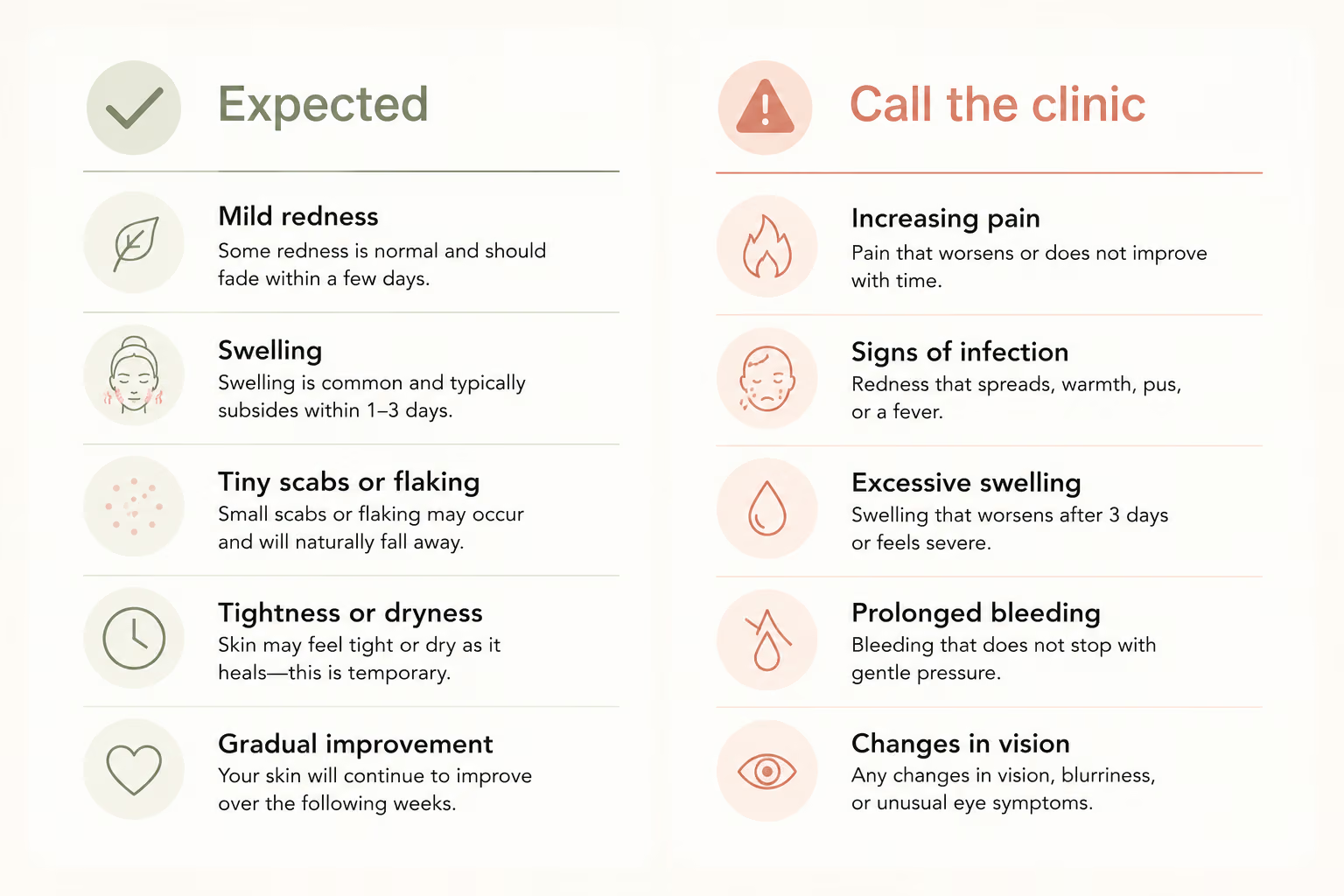
Normal, and not a reason to worry:
- Swelling for the first three days, worse in the mornings and worse around the eyes.
- A sunburn-like heat and tightness for 24 to 48 hours.
- Small dark carbon crusts across the treated area.
- Itching as the scabs dry and lift.
- Pinkness for up to four weeks after they fall away.
- Skin that feels slightly rough or uneven while it settles.
- Results that look underwhelming at two weeks. Collagen is not finished.
Worth a phone call to the clinic:
- Swelling that is worsening rather than improving after day three.
- Increasing pain rather than steadily decreasing discomfort.
- Yellow or green discharge, or spreading warmth and redness beyond the treated area.
- Fever.
- A cold sore developing, if you are prone to them, particularly around the mouth or lips. Tell us at consultation if you get them, because this is worth planning for in advance rather than reacting to.
- A scab that has come away early, leaving raw skin exposed.
- Pinkness that is still pronounced well past six weeks, or a patch that is turning darker rather than lighter.
None of these are common, and most are straightforward to manage when they are caught early. Call. That is what the clinic is there for.
How Recovery Differs by Treatment Area
The stages are the same everywhere, but the experience is not.
Eyelids and under-eye. The most swelling of any area, and the most socially visible. The skin here is the thinnest on the body, so it reacts more and it also heals well. Plan for the eyes to look genuinely puffy for two to three days. If you are treating droopy eyelids or hooding, this is the area worth booking a quiet week around.
Upper lip and barcode lines. Less swelling than the eyes but more everyday interference, because the area moves constantly when you eat and talk. Soft food for a couple of days makes it easier, and it is a common area for cold sores to flare if you are susceptible.
Lower lip, chin, and marionette lines. Similar to the upper lip, and equally exposed on video calls. Worth noting if you work on camera.
Face, neck, and body laxity. Larger treatment areas mean more scabs and more surface to keep dry, which makes the four-day rule more of an inconvenience. Clothing friction on the neck is the thing people underestimate. For broader skin laxity, plan for slightly longer healing than a small facial area.
Moles, skin tags, and superficial lesions. These heal much like the rest, but there is an important step before treatment rather than after. Any mole that has changed in size, shape, colour, or border, or that bleeds, itches, or looks different from your others, needs to be assessed by your family doctor or a dermatologist before anyone treats it cosmetically. We do not remove lesions that have not been assessed, and we would rather send you for an opinion than proceed. This has nothing to do with caution about the treatment and everything to do with the fact that removing something without knowing what it was removes the chance to find out.
Planning Around the Downtime
The practical answer for most people is one week.
If you have an event, a holiday, or anything that matters socially, count back and book so that you are at least ten days clear of it. That puts you comfortably past the scabs and into the pink phase, which covers easily with mineral makeup on most people.
Two other timing notes worth building into your plan. First, the second session cannot happen sooner than six weeks after the first, so a full course realistically takes three months from start to final result. Second, if you are treating anything and expecting to be in strong sun afterwards, move the appointment. The 30 days of diligent sun protection are not optional, and a beach holiday two weeks post-treatment undoes a great deal of good work.
If a Week of Scabs Is a Dealbreaker
It is a reasonable dealbreaker, and there are other routes.
Plexr Shower uses the same plasma technology in a non-ablative way. It is gentler, aimed at overall rejuvenation and mild textural unevenness rather than significant tightening, and the downtime is minimal. The trade-off is honest: less dramatic tightening for far less disruption.
NeoGen PSR resurfaces the full skin surface while leaving the outer layer intact as a natural dressing, which gives a different and generally more contained recovery. It is the better fit if your concern is skin quality, tone, and texture across the whole face rather than laxity in one specific area. It also handles fine lines and wrinkles and acne scars well.
A thread lift lifts sagging tissue mechanically rather than tightening skin, with a different recovery profile again. Our guide to non-surgical face lift options covers how these approaches compare and combine.
The Short Version
A Plexr plasma treatment asks for about a week of your appearance and 30 days of disciplined sun protection, and gives back tightening that typically holds for around five years. The scabs are the treatment working. Keep them dry, leave them alone, and wear sunscreen like you mean it.
Everything here is general guidance. The instructions you receive at your own appointment take precedence, because they are written for the area you actually had treated.
Book a complimentary consultation and we will walk through what recovery would look like for your specific areas before you commit to anything.
Frequently Asked Questions
How long does Plexr take to heal?
The carbon scabs fall away on their own within five to seven days. Swelling is most noticeable for the first three days, and the new skin underneath can stay pink for up to four weeks. Collagen continues forming for two to three months after that, which is when the final tightening becomes apparent.
Can I wear makeup after a Plexr treatment?
Not while the scabs are present. Once every scab has come away naturally and the skin has closed, mineral makeup can be used over the pink skin. Do not apply anything over the crusts to try to disguise them.
What happens if a scab comes off early?
Call the clinic. Early removal exposes skin that was not ready and is the most common cause of prolonged redness, uneven texture, and pigment change. It is manageable, but it is worth telling us rather than waiting to see.
Can I shower after a Plexr treatment?
Yes, but keep the treated area dry for the first four days. That means no water running over it, and no saunas, steam rooms, or swimming during that window.
How much downtime do I need to take off work?
Most people take none. There is no functional downtime, so normal daily activity continues throughout. The consideration is cosmetic rather than physical, so plan around social events and on-camera work rather than around your ability to function.
When will I see the final result?
Not for a few months. The immediate contraction is visible right away, but the collagen response builds over eight to twelve weeks. Most people see roughly 30 to 35 percent improvement per session and need two sessions six weeks apart, so allow around three months from your first appointment to your final result.
Does the treated area scar?
When the crusts are left to fall away naturally and the area is protected from sun, the treated skin heals without surgical scarring. Picking the scabs or exposing healing skin to UV is what puts texture and pigment changes at risk.
Related Reading
Last Updated:
August 30, 2026

Ready to Discuss Your Botox Treatment?
Book a consultation at our Calgary location to get a personalized treatment plan. Every face is different and yours deserves an approach that's tailored specifically to you.