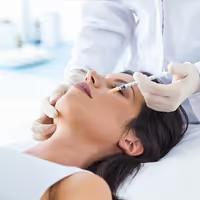
Nasolabial Fold Filler in Calgary: Smile Lines Treatment Guide
How dermal fillers smooth smile lines and restore mid-face volume in Calgary
May 20, 2026

Quick answer: Nasolabial fold filler softens the lines between the nose and the corners of the mouth using hyaluronic acid. Results typically last 9 to 18 months. Most patients need one to two syringes, often combined with mid-face support to restore cheek volume that contributes to the fold.
Smile lines, technically known as nasolabial folds, are the creases that run from the sides of your nose to the corners of your mouth. They are part of every face, but as we age they can deepen and become more visible, sometimes adding years to your appearance even when the rest of your skin looks healthy.
Dermal fillers for nasolabial folds offer a non-surgical way to soften these lines, restore lost volume in the mid-face, and rebalance your features without downtime. Using hyaluronic acid based dermal fillers, a trained injector can lift, support, and smooth the area in a single appointment.

What Are Nasolabial Folds (Smile Lines)?
Nasolabial folds are the natural creases that form between the nose and the mouth. They sit at the boundary between the cheek and the upper lip, and they become more pronounced when you smile or speak. Most people have some degree of nasolabial fold from a young age. The folds become a cosmetic concern when they deepen, lengthen, or take on a shadowed appearance at rest.
The term "smile lines" is the consumer-friendly name for the same anatomical structure. While they are commonly associated with aging, the depth and shape of your nasolabial folds is influenced by bone structure, mid-face volume, skin laxity, and genetics, not just years on the calendar.

Why Nasolabial Folds Develop Over Time
The deepening of nasolabial folds is a multi-factor process. Research published in Aesthetic Plastic Surgery by Mendelson and Wong (2012) shows that the facial skeleton itself remodels with age. The bones around the eyes, nose, and upper jaw lose projection, which removes the structural support that holds the cheeks forward.
At the same time, the deep and superficial fat compartments of the mid-face descend, and the skin loses elasticity. The result is gravity working with less support, less volume, and looser skin, all of which deepen the fold between the cheek and upper lip. Sun damage, smoking, and rapid weight loss can accelerate the process.
Treating nasolabial folds well usually means treating the cause, not just the line. Filler placed only in the fold can look heavy or unnatural. Filler placed strategically in the mid-face to restore lost cheek support often softens the fold from above, with a more youthful overall result.
What Dermal Fillers Can Do for Smile Lines
Dermal fillers for nasolabial folds can address several concerns at once:
- Soften deep folds that are visible at rest
- Restore lost volume in the mid-face that contributes to the fold
- Lift the cheek and reduce shadowing along the nose-to-mouth line
- Improve facial balance between the upper, middle, and lower face
- Smooth the transition into related areas, such as the corners of the mouth and the marionette lines below
The best results almost always come from a combination approach. A skilled injector will assess your full face, not just the line, and place product where it will do the most structural good.
Best Dermal Fillers for Nasolabial Folds
Hyaluronic acid (HA) fillers are the gold standard for nasolabial fold correction. A landmark trial by Narins et al. (2003) in Dermatologic Surgery established that HA fillers like Restylane provided superior, longer-lasting correction of nasolabial folds compared to older collagen-based products. Subsequent generations of HA fillers have built on those results with smoother textures, longer durability, and better lifting capacity.
Your injector may use thicker, more cohesive products like Juvederm Voluma or Restylane Lyft to rebuild mid-face support, then a softer product like Juvederm Volift or Restylane Defyne directly in the fold for a smooth finish (Rohrich et al., 2019). The choice depends on your anatomy, the depth of the fold, and your goals.

Who Is a Good Candidate?
Smile line filler is appropriate for adults who want to soften the appearance of nasolabial folds without surgery. You may be a good candidate if:
- Your nasolabial folds are visible at rest, not just when you smile
- You notice flattening or descent of the cheek that makes the fold look deeper
- You want a non-surgical, reversible option
- You have realistic expectations and prefer a natural, refreshed look over a dramatic change
Smile line filler is not the right fit for those with significant skin laxity that would benefit more from surgery, active skin infection in the area, or a history of severe allergic reactions to HA fillers. A consultation will clarify whether filler, a different treatment, or a combination is the best path forward.
What to Expect During Treatment
A nasolabial fold filler appointment usually takes 30 to 45 minutes from start to finish.
Consultation. Your injector will look at the fold in context with your cheeks, lips, and overall facial proportions. Photos may be taken for the chart and for your before-and-after reference.
Preparation. The area is cleaned and a topical numbing cream is usually applied. Most HA fillers also contain lidocaine, which reduces discomfort during the injection itself.
Injection. Filler is placed using a needle or a blunt-tipped cannula, depending on the technique your injector prefers and the depth of the fold. You may feel pressure, mild stinging, or a brief pinch.
Immediate result. You will see a difference right away. Mild swelling can exaggerate the result for the first day or two. The final settled result is visible at one to two weeks.
Recovery and Aftercare
Recovery from smile line filler is quick. Most people return to work or normal activities the same day. Common short-term effects include mild swelling, tenderness, and occasional bruising at the injection sites, which usually resolve within a few days.
For the first 24 to 48 hours, avoid intense exercise, alcohol, saunas, hot yoga, and any blood thinners that have not been cleared by your physician. Sleeping with your head slightly elevated can help reduce swelling. Gentle cold compresses are fine; aggressive massage is not.
How Long Does Smile Line Filler Last?
Most patients see results from nasolabial fold filler that last 9 to 18 months, depending on the product used, the volume injected, and individual metabolism. The mid-face is a moderately mobile area, so it tends to break down filler somewhat faster than the chin or jawline, but slower than the lips.
Touch-up treatments are common at the 12 month mark. Many patients find that subsequent appointments require less product because residual filler from the previous session continues to provide a small foundation (Rohrich et al., 2019).
How Much Does Smile Line Filler Cost in Calgary?
The cost of nasolabial fold filler depends on how much product is needed, which in turn depends on the depth of the fold and whether your injector is also rebuilding mid-face support. Many treatments use one to two syringes for the folds themselves, with additional product if cheek support is being addressed at the same appointment.
At Arlo Medical, dermal filler pricing is reviewed during a complimentary consultation, so you have a clear picture before committing. Book a free consultation for a personalized plan.
Smile Line Filler vs. Surgical Options
Surgical options for nasolabial folds include mid-face lifts and direct excisions. Both can produce dramatic, long-lasting results, but they involve incisions, anesthesia, and weeks of recovery. They also commit you to a specific outcome.
Dermal fillers offer a reversible, gradual alternative. Hyaluronic acid can be dissolved with hyaluronidase if you change your mind or want to adjust. For most patients in their thirties through fifties, smile line filler combined with mid-face support is a more practical and lower-risk option than surgery, and it can be revisited or refined as your face changes.
Marionette Lines: The Lower-Face Counterpart
Marionette lines are the vertical lines that run downward from the corners of the mouth to the chin. They are anatomically related to the nasolabial folds, share many of the same causes (volume loss, skin laxity, descent of the soft tissues), and are often treated in the same appointment.
If your nasolabial folds are starting to soften the corners of your mouth too, ask your injector whether addressing both areas together would produce a more balanced result. The same fillers used for smile lines work well for marionette lines, and combining the two is often more cost-effective than two separate appointments.
Choosing the Right Practitioner in Calgary
The mid-face contains important vascular structures, including the angular and facial arteries, which run close to the nasolabial fold. Filler injected without a careful understanding of this anatomy carries a small but serious risk of vascular complications. Choosing a practitioner with advanced training in facial anatomy and complication management is essential.
At Arlo Medical, our team of registered healthcare professionals has advanced training in injectable techniques and the management of rare adverse events. We take a conservative, evidence-based approach because a well-placed filler should refresh your features, not change who you are.
Related Reading
- Jawline Filler: What to Expect and Who It's For
- Chin Filler in Calgary: Cost, Results & What to Expect
- Dermal Fillers Under Eyes: Tear Trough Guide
- Loss of Facial Volume
- Fine Lines and Wrinkles
References:
- Mendelson, B., & Wong, C-H. (2012). Changes in the Facial Skeleton with Aging: Implications and Clinical Applications in Facial Rejuvenation. Aesthetic Plastic Surgery, 36(4), 753-760.
- Narins, R.S., Brandt, F., Leyden, J., et al. (2003). A Randomized, Double-Blind, Multicenter Comparison of the Efficacy and Tolerability of Restylane Versus Zyplast for the Correction of Nasolabial Folds. Dermatologic Surgery, 29(6), 588-595.
- Rohrich, R.J., et al. (2019). Practical Guidelines for Hyaluronic Acid Soft-Tissue Filler Use in Facial Rejuvenation. Dermatologic Surgery, 45(Suppl 1), S77-S84.
- Rohrich, R.J., et al. (2019). Practical Approach and Safety of Hyaluronic Acid Fillers. Plastic and Reconstructive Surgery Global Open, 7(12), e2172.
Last Updated:
May 20, 2026


Ready to Discuss Your Botox Treatment?
Book a consultation at our Calgary location to get a personalized treatment plan. Every face is different and yours deserves an approach that's tailored specifically to you.