Chin Filler in Calgary: Cost, Results & What to Expect
What to know about non-surgical chin augmentation with dermal fillers in Calgary
October 1, 2026

Quick answer: Chin filler uses hyaluronic acid to add projection, smooth dimpling, and improve lower-face balance without surgery. Most treatments use one to two syringes, which is $650 to $1,300 at Arlo Medical, and results typically last 12 to 18 months. Chin filler adds structure to the chin. It does not remove fullness under the chin.
A well-defined chin plays a major role in facial balance. It anchors the lower face, supports the jawline, and contributes to the overall harmony of your profile. When the chin lacks projection or definition, the entire face can appear shorter, rounder, or less structured than you might like.
Dermal fillers for the chin offer a non-surgical way to reshape and enhance this area without implants, general anesthesia, or extended downtime. Using hyaluronic acid-based dermal fillers, a trained injector can add projection, smooth dimpling, and bring the lower face into better proportion with the rest of your features.
What Are Chin Fillers?
Chin fillers are injectable treatments that use hyaluronic acid (HA) to add volume, structure, and definition to the chin. HA is a naturally occurring substance in the body that attracts and retains moisture, making it well suited to soft tissue augmentation.
For chin enhancement, injectors typically use thicker, more robust filler formulations that can provide structural support and resist the compressive forces of the lower face. Products like Juvederm Voluma, Restylane Lyft, and Revanesse are commonly chosen for their ability to maintain shape and projection over time (Rohrich et al., 2019).
Why the Chin Changes Over Time
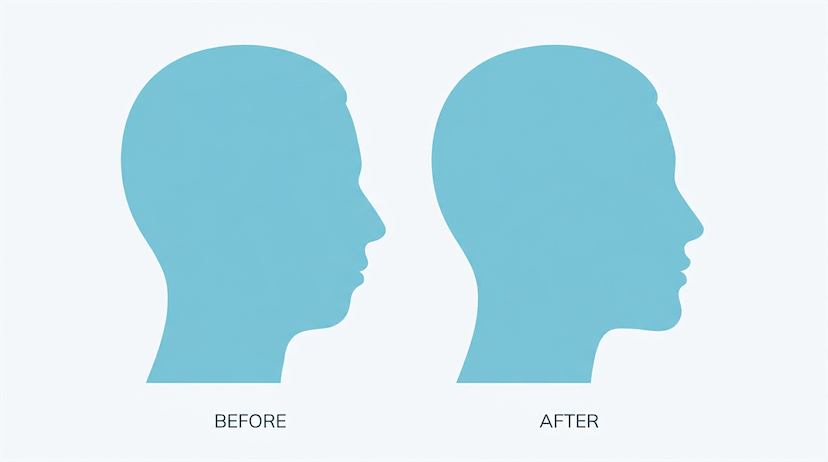
Chin recession is not always something you are born with. Bone resorption is a natural part of aging, and the mandible (lower jaw) loses volume progressively over the decades. A study published in Plastic and Reconstructive Surgery by Shaw and Kahn (2010) demonstrated measurable reductions in mandibular height and chin projection in both men and women as they age.
This loss of facial volume in the lower face can create the appearance of a receding chin, sagging skin, and a less defined profile. Soft tissue changes, including fat pad descent and skin laxity, compound the effect.
What Chin Fillers Can Do
Dermal fillers for the chin can address a range of concerns, including:
- Adding forward projection to a receding or flat chin
- Smoothing a "peach pit" or dimpled chin (mentalis strain)
- Softening mild facial asymmetry in the lower face
- Lengthening a short or round face shape
- Enhancing the connection between chin and jawline for a more sculpted profile
The results are subtle but noticeable. Even a small amount of filler in the chin can improve facial proportions and profile balance.
What Chin Filler Does Not Do
Chin filler is often confused with treatments for a double chin. They solve different problems. Filler adds structure to the chin itself. It does not reduce fat or tighten loose skin under the chin.
That said, a chin that lacks projection can make fullness underneath look more pronounced, so improving chin projection sometimes makes the neck line look cleaner. If fullness under the chin is your main concern, our double chin page explains what we can and cannot help with.
Who Is a Good Candidate?
Chin filler works well for adults who want to improve lower face definition without surgery. You may be a good candidate if you have:
- A chin that appears short, flat, or recessed
- Dimpling or "orange peel" texture on the chin
- Mild asymmetry in the lower face
- A desire for better profile balance between your nose, lips, and chin
Chin fillers are not recommended for people with active skin infections in the treatment area, certain autoimmune conditions, or allergies to hyaluronic acid. A consultation with a qualified injector will help determine whether this treatment suits your anatomy and goals.
What to Expect During Treatment
Chin filler appointments typically take 15 to 30 minutes. Here is what the process looks like:
Consultation. Your injector will assess your facial structure, discuss your goals, and develop a treatment plan. Photos may be taken for reference.
Preparation. The treatment area is cleaned and a topical numbing cream may be applied. Most HA fillers also contain lidocaine, which provides additional comfort during injection. What you do in the two weeks beforehand also matters for bruising, and our guide to preparing for dermal filler covers it.
Injection. Using a needle or cannula, the filler is placed in precise locations along the chin to build projection, smooth texture, or soften asymmetry. You may feel pressure, but the procedure is generally well tolerated.
Immediate results. You will see a difference right away, though mild swelling can temporarily exaggerate the effect. The final result settles over the following one to two weeks.
Recovery and Aftercare
Recovery from chin filler is minimal. Most people return to their normal routine the same day. Common side effects include mild swelling, tenderness, and occasional bruising at the injection sites. These typically resolve within a few days, and some people notice mild tenderness when moving the jaw for a day or two.
For the first 24 to 48 hours after treatment, it is best to avoid intense exercise, excessive heat (saunas, hot yoga), and applying heavy pressure to the chin area. Sleeping with your head slightly elevated can help reduce swelling. Our dermal filler aftercare guide covers what is normal and the signs that need a call.
Risks and Side Effects
Chin filler is one of the more forgiving filler areas, but like any injectable it carries risks. Swelling, bruising, and tenderness are common and temporary. Less common problems include lumps, asymmetry, and filler moving from where it was placed, which is more likely when new filler is layered over old. Our guide to filler migration explains the signs and what fixes it.
The most serious risk with any filler is a vascular complication, where filler affects blood supply to the skin. It is rare, and it is the reason your injector's anatomy training and complication plan matter. Hyaluronic acid filler can be dissolved with hyaluronidase, and we have written openly about how a suspected vascular occlusion is managed.
How Long Do Chin Fillers Last?
Chin fillers generally last between 12 and 18 months, depending on the product used, the amount injected, and individual metabolism. Because the chin is a relatively low-movement area compared to the lips, filler tends to last longer here. Our guide to how long dermal fillers last compares areas.
Hyaluronic acid fillers are gradually broken down by the body over time through natural enzymatic processes. Touch-up treatments can maintain your results, and many clients find they need slightly less product at later appointments as residual filler provides a foundation (Rohrich et al., 2019).
How Much Does Chin Filler Cost in Calgary?
At Arlo Medical, dermal filler is priced by the syringe:
- Half syringe: $325
- Full syringe: $650
Most chin treatments use one to two syringes, so a typical chin treatment is $650 to $1,300. Some people treat the chin and jawline together for a more connected lower-face contour, which uses more product. The exact amount depends on your anatomy and goals and is confirmed at your complimentary consultation before anything is agreed.
Chin Filler vs. Chin Implants
Surgical chin implants are a permanent option for chin augmentation, but they require anesthesia, incisions, and a longer recovery period. Dermal fillers offer a reversible, non-surgical alternative that allows you to preview a change before committing to anything permanent.
For those who are not sure whether they want a surgical procedure, chin filler can serve as a trial run. If you are happy with the result, you may choose to maintain it with periodic filler treatments or speak to a plastic surgeon about an implant down the road.
Choosing the Right Injector in Calgary
Chin filler requires a thorough understanding of facial anatomy, including the mental nerve, labiomental fold, and submental fat compartments. Choosing an injector who has specific training in facial aesthetics is essential for natural-looking results.
At Arlo Medical, our team of registered healthcare professionals has advanced training in facial anatomy and injectable techniques. We take a conservative, evidence-based approach to every treatment, because a well-placed chin filler should enhance your natural features, not change who you are. Results vary from person to person, and suitability is assessed individually.
Frequently Asked Questions
How much does chin filler cost in Calgary?
At Arlo Medical, filler is $325 per half syringe and $650 per full syringe. Most chin treatments use one to two syringes, so $650 to $1,300 is typical. The exact amount is confirmed at your complimentary consultation.
How long does chin filler last?
Usually 12 to 18 months. The chin moves less than the lips, so filler tends to last longer there. Product choice, the amount placed, and your metabolism all affect it.
Does chin filler hurt?
Most people find it very tolerable. Numbing cream is usually applied first, and most chin fillers contain lidocaine. You may feel pressure during placement and some tenderness for a day or two.
Will chin filler get rid of a double chin?
No. Chin filler adds structure to the chin itself and does not reduce fat or tighten skin under it. Better chin projection can make the neck line look cleaner, but it is not a double chin treatment.
Can chin filler be reversed?
Hyaluronic acid chin filler can be dissolved with an enzyme called hyaluronidase if needed. Dissolving is a real treatment rather than an instant undo, and it is discussed at your consultation if it ever becomes relevant.
Is chin filler a good alternative to a chin implant?
For many people, yes. Filler gives a non-surgical, reversible change with little downtime, and it can show you what added projection looks like before you consider anything permanent. Filler needs maintenance, while an implant is a one-time surgery with its own risks and recovery.
Related Reading
- Jawline Filler: What to Expect and Who It's For
- How to Prepare for Dermal Filler
- Dermal Filler Aftercare
- Dermal Fillers: The Complete Guide
- Sculptra vs Dermal Fillers
- Loss of Facial Volume
- Facial Asymmetry
References:
- Shaw, R.B., & Kahn, D.M. (2010). Aging of the Mandible and Its Aesthetic Implications. Plastic and Reconstructive Surgery, 125(1), 332-342.
- Rohrich, R.J., et al. (2019). Practical Guidelines for Hyaluronic Acid Soft-Tissue Filler Use in Facial Rejuvenation. Dermatologic Surgery, 45(Suppl 1), S77-S84.
- Rohrich, R.J., et al. (2019). Practical Approach and Safety of Hyaluronic Acid Fillers. Plastic and Reconstructive Surgery Global Open, 7(12), e2172.
Last Updated:
September 27, 2026


Ready to Discuss Your Botox Treatment?
Book a consultation at our Calgary location to get a personalized treatment plan. Every face is different and yours deserves an approach that's tailored specifically to you.