Sculptra vs Dermal Fillers: How to Choose the Right Treatment
One rebuilds your own collagen over months, the other restores volume the same day. Here is how to tell which fits your goals.
September 23, 2026

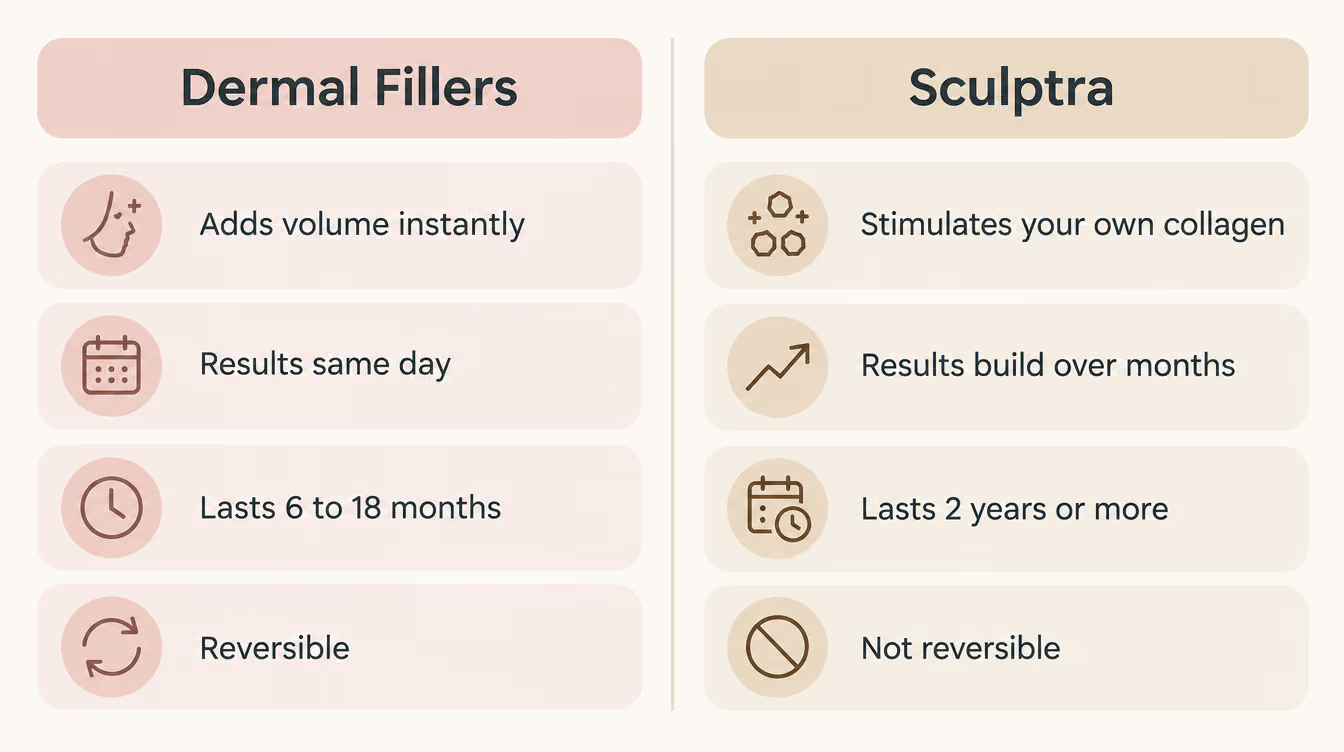
Quick answer: Dermal fillers use hyaluronic acid to add volume immediately, with results visible the same day and lasting 6 to 18 months depending on the area. Sculptra uses poly-L-lactic acid to stimulate your own collagen, so results build over 6 to 8 weeks across a series of sessions and can last two years or more. Choose fillers for a specific area or a fast result, and Sculptra for gradual, widespread volume restoration. Many people eventually use both.
If you have been researching injectables in Calgary, you have probably come across both dermal fillers and Sculptra. They are both injected, both restore lost volume, and both are often described as "fillers," which makes them easy to confuse.
They work in fundamentally different ways, though, and that difference decides which one suits you. This guide breaks down how each works, what results look like, what they cost, and how to choose.
The Core Difference
Dermal fillers add volume. Sculptra helps you build your own.
Dermal fillers are made from hyaluronic acid, a substance your body already produces. When injected, the gel physically occupies space beneath the skin, so the volume is there the moment the treatment ends.
Sculptra is made from poly-L-lactic acid (PLLA). It does not add lasting volume itself. Instead, it acts as a stimulus that prompts your body to produce new collagen in the treated area. The product is gradually absorbed, and the collagen your body builds is what creates the result.
That single distinction explains almost every other difference between them.

Timeline: Instant vs Gradual
With dermal fillers you see a difference immediately, with some swelling that settles over roughly two weeks to reveal the final result.
With Sculptra, nothing dramatic happens right away. Any initial fullness is just fluid from the injection and it subsides within days. True results begin appearing at 6 to 8 weeks as collagen forms, and continue improving over several months. Most people reach their goal after 2 to 3 sessions spaced 6 to 8 weeks apart.
This is the deciding factor for many people. If you have an event in three weeks, Sculptra is the wrong choice. If you would rather your change appear so gradually that nobody can point to when it happened, it is exactly right.
What Each One Treats
Dermal fillers are precise and versatile, which makes them the better tool for a defined area:
- Lips, for volume and shape
- Cheeks, for restored midface volume
- Chin and jawline, for definition and projection
- Under-eye hollows
- Smile lines and marionette lines
Sculptra works over broader areas and suits widespread, gradual volume loss:
- Cheeks and midface
- Temple hollowing
- Jawline contouring
- Lower face hollowing and the pre-jowl area
- Overall skin laxity and firmness
One important limit: Sculptra is not typically used in the lips or under the eyes. Those delicate, high-movement areas call for hyaluronic acid, where placement is precise and the result is reversible.
How Long Results Last
Hyaluronic acid fillers last 6 to 18 months depending on the area, since high-movement zones like the lips break product down faster than structural areas like the cheeks. Our guide to how long dermal fillers last covers this area by area.
Sculptra results typically last two years or more. Because the result is your own collagen rather than a gel, it fades on your body's timeline instead of the product's.
Reversibility: A Real Advantage for Fillers
Hyaluronic acid fillers can be dissolved with an enzyme administered by a clinician. It is a real intervention rather than a clean undo button: the enzyme also affects your own tissue's hyaluronic acid, and long-standing filler can take more than one session. Our guide to filler migration covers what dissolving actually involves. Still, if you are unhappy with a result, that option exists.
Sculptra cannot be reversed this way. Because it works by stimulating your own collagen, there is no dissolving agent. This is not a reason to avoid it, but it is a reason to go slowly and choose an experienced injector. Building gradually across sessions is the safeguard.
Cost in Calgary
At Arlo Medical:
- Dermal fillers: $325 per half syringe, $650 per full syringe. Lip enhancement often takes a single syringe, while cheeks or jawline contouring may need two or more.
- Sculptra: $700 per vial. Most sessions use 2 to 3 vials, and a common guideline is roughly one vial per decade of life, spread across 2 to 3 sessions. Someone in their forties might plan for about four vials total.
Sculptra carries a higher upfront cost, but it is worth comparing over time rather than per visit. Results lasting two years or more mean fewer maintenance appointments than a filler plan refreshed annually.
What Treatment Day Looks Like
Dermal fillers: 15 to 45 minutes. Numbing cream beforehand, and most fillers also contain lidocaine. Most people return to normal activities the same day, with possible swelling or bruising for a few days.
Sculptra: 30 to 45 minutes with local anesthetic for comfort. Temporary swelling, redness, or mild bruising is normal. Aftercare matters more here, and there is one rule to follow closely: massage the treated area for 5 minutes, 5 times a day, for 5 days. This helps distribute the product evenly and reduces the risk of firm areas forming.
Who Should Not Have Sculptra
Sculptra may not be appropriate if you want immediate, dramatic volume, are pregnant or breastfeeding, have certain autoimmune or inflammatory conditions, or are prone to keloid scarring. A full medical review is done before treatment.
So Which One Should You Choose?
Lean toward dermal fillers if you want a result you can see right away, are treating a specific feature like the lips or chin, value the ability to reverse it, or are trying injectables for the first time.
Lean toward Sculptra if you are addressing broad facial volume loss rather than one feature, prefer a change that appears gradually, want the longest-lasting result, and are comfortable investing across a series of sessions.
They Also Work Well Together
This is not strictly an either-or decision. A common approach uses Sculptra to rebuild the deep foundation across the midface and jawline, then hyaluronic acid filler for precise detail in areas Sculptra does not treat, like the lips and under-eyes.
At a complimentary consultation our injectors assess your facial structure and volume loss, then recommend the approach that actually fits your goals and timeline, including telling you if one treatment alone will do the job.
Frequently Asked Questions
Is Sculptra a filler?
It is often grouped with fillers because it is injected and restores volume, but it works differently. Traditional fillers add volume directly with a hyaluronic acid gel. Sculptra stimulates your body to produce its own collagen over time.
Which lasts longer, Sculptra or dermal fillers?
Sculptra generally lasts longer, typically two years or more, compared with 6 to 18 months for hyaluronic acid fillers. The tradeoff is that Sculptra takes months to show its full result.
Can I get both?
Yes, and many people do. Sculptra is often used to rebuild broad structural volume while dermal fillers handle precise areas like the lips and under-eyes.
Does Sculptra work for lips?
No. Sculptra is not typically used in the lips or under-eyes. Hyaluronic acid filler is the appropriate choice for those areas.
How many Sculptra sessions will I need?
Most people need 2 to 3 sessions spaced 6 to 8 weeks apart. A common starting guideline is about one vial per decade of life, confirmed at your consultation.
Can Sculptra be dissolved if I do not like it?
No. Unlike hyaluronic acid fillers, there is no dissolving agent for Sculptra, which is why a conservative, gradual approach and an experienced injector matter.
Related Reading
Last Updated:
September 23, 2026



Ready to Discuss Your Botox Treatment?
Book a consultation at our Calgary location to get a personalized treatment plan. Every face is different and yours deserves an approach that's tailored specifically to you.