Hooded Eyes and Droopy Eyelids: Non-Surgical Options in Calgary
How plasma skin tightening lifts hooded eyelids without incisions, and how to tell if you are a candidate.
September 14, 2026
Quick answer: Hooded eyes can often be improved without surgery using plasma skin tightening, sometimes called a non-surgical blepharoplasty. A plasma device tightens and contracts the loose skin above the eye, with results building as collagen forms. Most people see 30 to 35 percent improvement per session and need two sessions, with results lasting around five years. It suits mild to moderate hooding, not true eyelid muscle drooping, which needs surgical assessment.
Hooded eyes happen when loose skin on the upper eyelid folds down over the crease, sometimes far enough to rest on the lashes. Some people are born with it, and for others it develops gradually as skin loses firmness with age. Either way, it can make the eyes look heavy or tired, and it can make eye makeup difficult to wear.
Surgery has traditionally been the answer, but it is no longer the only one. At Arlo Medical in Calgary, we treat mild to moderate eyelid hooding with plasma skin tightening, a non-surgical approach with no incisions and no general anesthesia. Here is how it works and how to tell whether it suits you.
What Causes Hooded Eyes?
The skin around the eyes is the thinnest on the body, so it shows change early. As collagen and elastin decline, that skin loses its ability to snap back and begins to settle into a fold above the crease. Genetics play a large role too, which is why some people have hooded lids in their twenties while others develop them much later. Sun exposure, smoking, and natural loss of underlying support all speed the process along.
The result is droopy eyelids and sagging skin around the eyes, often alongside fine lines in the same area.
Hooded Eyelids vs Ptosis: An Important Difference
These two look similar but are not the same thing, and the distinction decides your treatment.
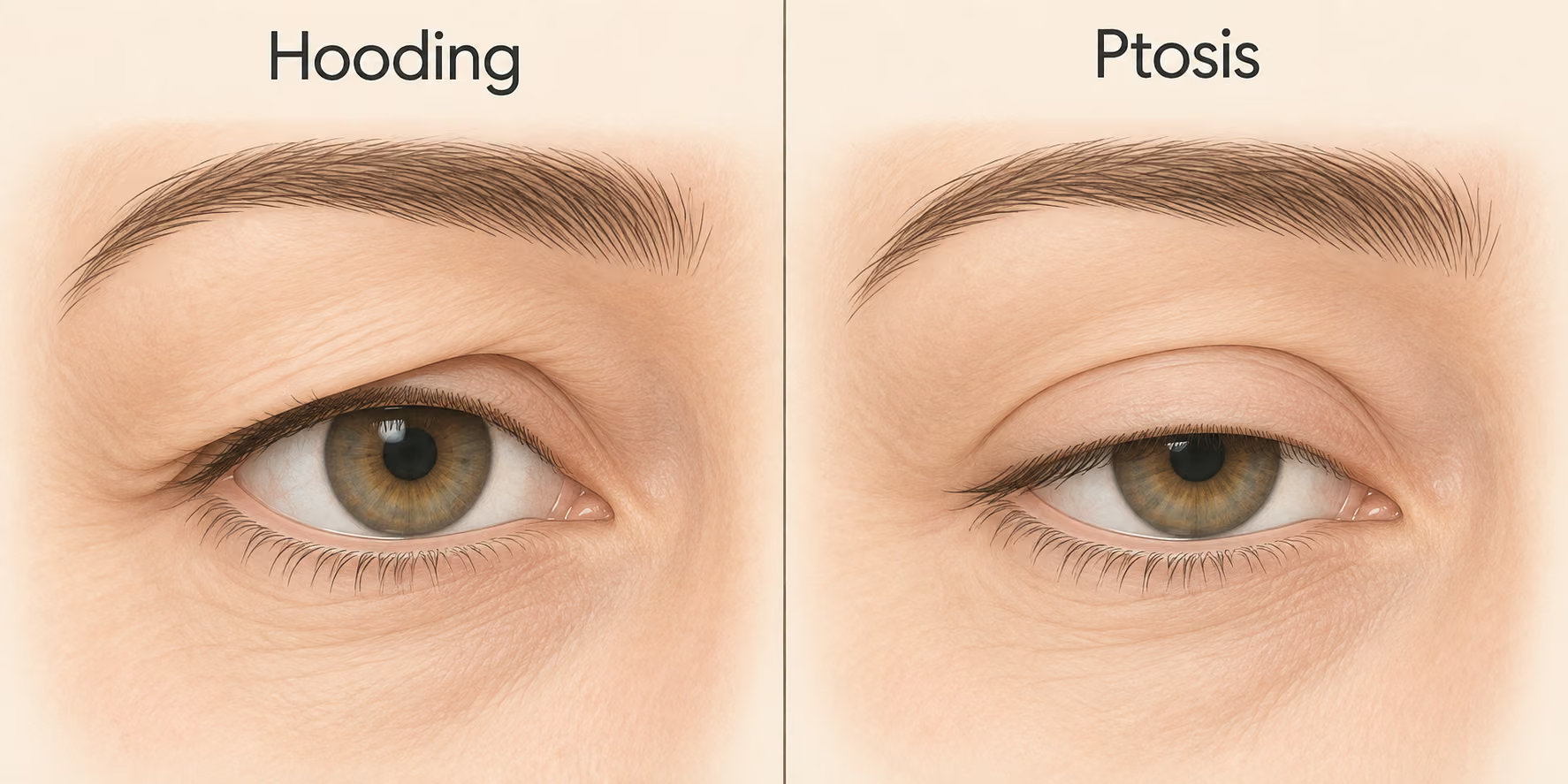
Hooding is excess or lax skin on the upper lid. It is a skin issue, and skin-tightening treatments can improve it.
Ptosis is when the eyelid muscle itself weakens and the lid margin sits lower than it should. This is a muscular issue, not a skin one, and non-surgical treatments will not correct it. True ptosis needs assessment by a surgeon or ophthalmologist, particularly if it affects your vision.
A consultation will establish which one you have before any treatment is recommended. If yours is ptosis or very significant skin excess, we will tell you honestly that a surgical opinion is the better path.
How Non-Surgical Eyelid Tightening Works
The treatment uses a plasma device that creates a fine plasma arc between its tip and the skin surface, without ever touching or cutting it. Each precise point of contact causes the treated skin to contract immediately, and the surrounding tissue is left intact.
Two things then happen. The immediate contraction tightens the loose skin, and over the following weeks the body responds by producing new collagen in the treated area, which continues to firm and support the lid.
Because this treatment tightens skin rather than removing it, it is often called a non-surgical blepharoplasty or a Plexr eye lift. That name describes the goal rather than the method: there are no incisions, no stitches, and no general anesthesia involved.
What to Expect During Treatment
A topical numbing cream is applied about 45 minutes beforehand, so the treatment itself is comfortable for most people. Treating the eyelid area takes roughly 10 to 40 minutes depending on how much is being covered.
Afterward, small carbon crusts form over each treated point. This is the expected response and part of how the skin heals.
Recovery: What Is Normal
This is not a no-downtime treatment, and it is worth planning around.
- Days 1 to 3: swelling around the eyes is common and often most noticeable on waking.
- Days 4 to 7: the small carbon crusts dry and fall away naturally. Do not pick them.
- Weeks 1 to 4: the new skin underneath may stay pink for up to a month.
Most people continue their normal daily activities throughout, but many prefer to schedule around social or work events during the first week. Our Plexr recovery guide walks through each stage in detail.
Results and How Many Sessions You Need
Results build gradually as collagen forms rather than appearing overnight. Most patients see roughly 30 to 35 percent improvement per session, and most reach their goal with two sessions spaced at least six weeks apart.
Once achieved, results are long lasting, typically around five years, though natural aging continues in the background.
Aftercare That Protects Your Result
- Keep the treated area dry for the first four days.
- Do not pick or remove the crusts; let them fall away on their own.
- Apply sunscreen daily, several times a day, for at least 30 days. This is the single most important step for preventing pigment changes.
- Wait a minimum of six weeks before a second session.
Who Is a Good Candidate?
You may be a good candidate if you have mild to moderate upper eyelid hooding or crepey lid skin, you want to avoid surgery, and you can accommodate about a week of visible healing.
It is generally not appropriate if you have true ptosis, very significant skin excess, an active infection in the area, or are pregnant or breastfeeding. Deeper skin tones carry a higher risk of temporary pigment change and need careful assessment first.
Cost in Calgary
At Arlo Medical, non-surgical blepharoplasty for the upper eyelids starts at $1,000 per area, and under-eye treatment is also $1,000. Because most people need two sessions, it is worth planning for the full course rather than a single visit. Your exact plan is confirmed at a complimentary consultation.
Other Options to Consider
Eyelid hooding rarely appears in isolation. If the surrounding skin quality is also a concern, NeoGen PSR can also be used to improve skin texture around the eyes. If sagging extends into the brow or midface, a thread lift may lift the area more effectively. Our guide to non-surgical face lift options covers how these work together.
Book a complimentary consultation and we will assess your eyelid anatomy and tell you honestly which approach fits, including whether surgery would serve you better.
Frequently Asked Questions
Is a non-surgical blepharoplasty actually surgery?
No. The term describes the goal, not the method. There are no incisions, no stitches, and no general anesthesia. A plasma device tightens the skin from the surface using topical numbing only.
How long do results last?
Results typically last around five years once you complete your sessions. Natural aging continues, so some people choose a touch-up later.
Does it hurt?
A topical numbing cream is applied about 45 minutes before treatment. Most people describe the sensation as tolerable, though the eye area can feel more sensitive than others.
How much downtime should I plan for?
Plan for about a week. Swelling is most noticeable for the first three days, and the small crusts fall away within five to seven days. Pinkness can linger up to four weeks.
Will this fix eyelids that droop into my vision?
Probably not. Drooping that affects vision is usually ptosis, a muscle issue rather than a skin issue, and it needs surgical assessment. A consultation will identify which one you have.
Related Reading
Last Updated:
September 14, 2026



Ready to Discuss Your Botox Treatment?
Book a consultation at our Calgary location to get a personalized treatment plan. Every face is different and yours deserves an approach that's tailored specifically to you.