Jowls: What Actually Causes Them, and What Non-Surgical Treatment Can and Cannot Do
Jowls are the hardest thing on the face to fix without surgery. Here is what actually causes them, and what each treatment realistically does.
October 8, 2026
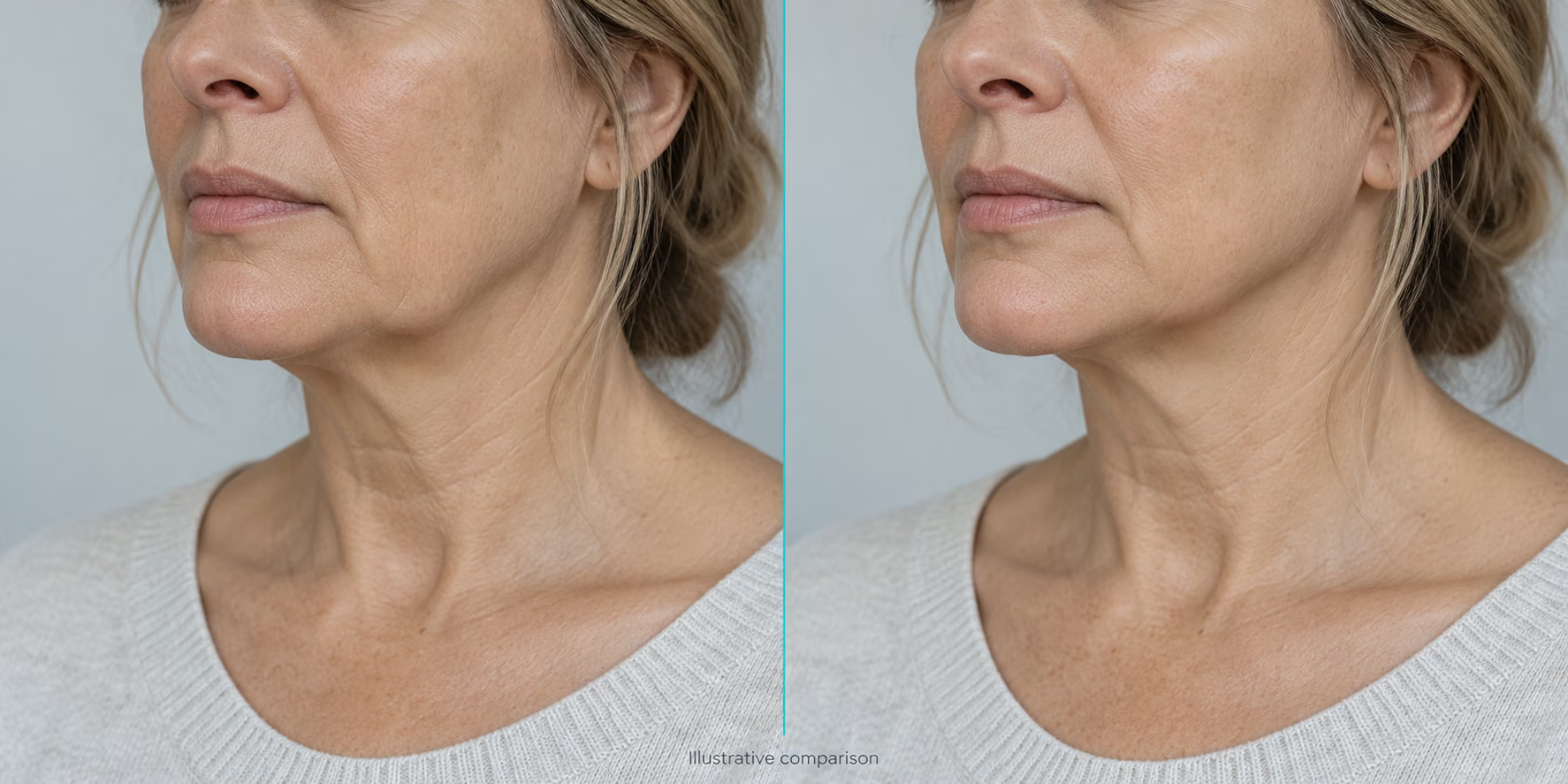
Quick answer: Jowls are the soft tissue that sags below the jawline as the face loses volume and support with age. They are not simply loose skin, which is why skin tightening on its own often disappoints. Non-surgical treatment works best on mild to moderate jowling, and usually by restoring volume higher in the face rather than treating the jowl itself. Dermal fillers and Sculptra rebuild midface support, a thread lift can reposition tissue, and plasma skin tightening can improve skin quality along the jawline. Significant jowling is a surgical problem, and a good consultation will tell you which one you have.
Jowls are the thing people notice in a photograph taken from below, or on a video call, and then cannot stop noticing. They are also the single hardest age-related change to improve without surgery, which is not what most articles on the subject will tell you.
Here is what they actually are, why the usual advice underperforms, and what each option can realistically do.
What Jowls Are
A jowl is soft tissue that has descended below the jawline, so the clean line from chin to ear becomes interrupted. The result is a slight squaring or drooping at the sides of the chin, usually with a small hollow just in front of it.
Most sources describe this as loose skin. That is a small part of it, and treating it as the whole explanation is why so many people spend money on skin tightening and feel let down.
What Actually Causes Them
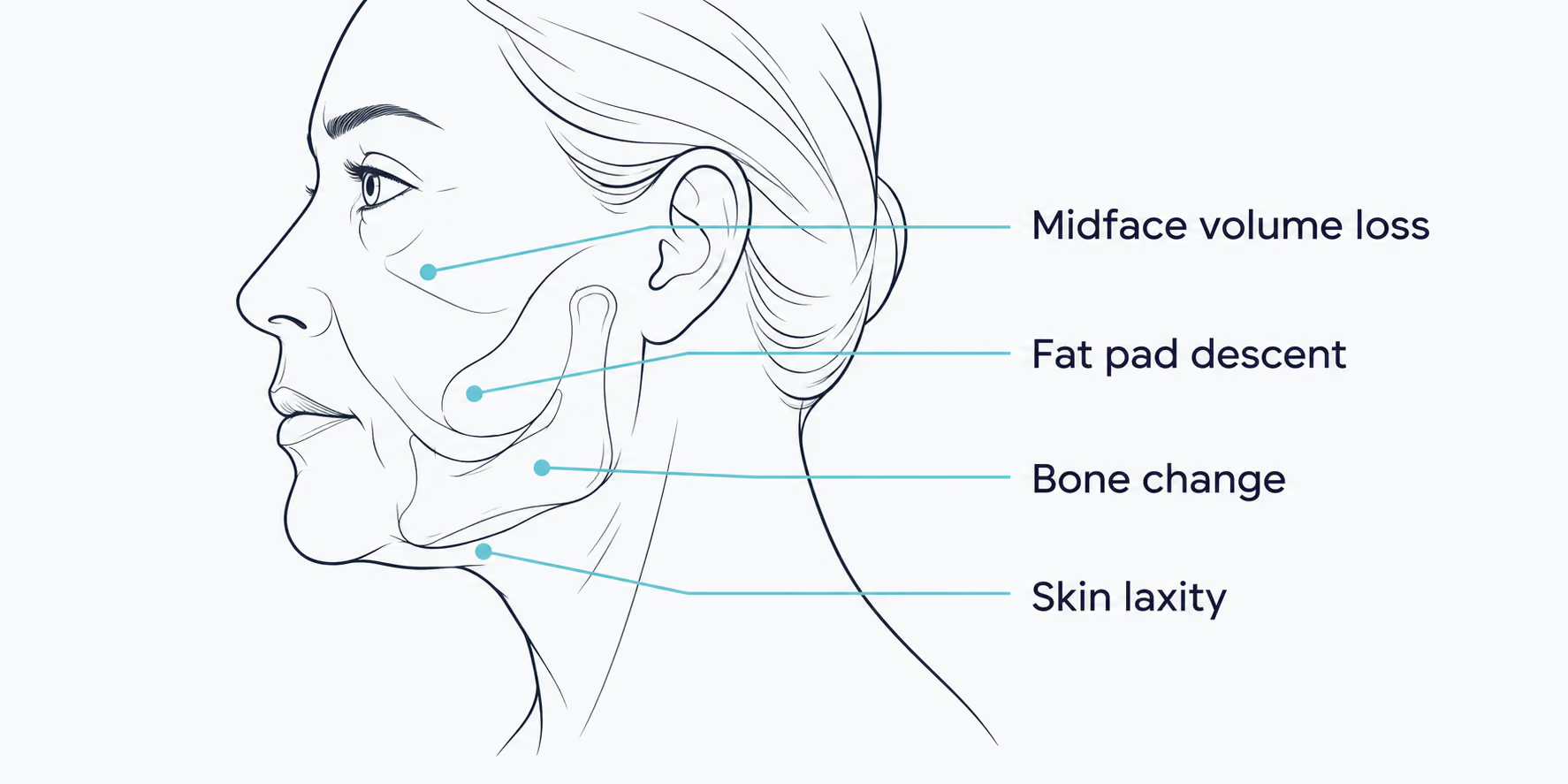
Four things happen at once, and only one of them is skin.
Volume loss higher up. The face loses fat from the cheeks and midface with age. That tissue used to sit up and forward, supporting everything below it. As it diminishes, the tissue lower down has less to rest on and drifts downward. A jowl is often a midface problem that shows up at the jawline.
Descent of the fat pads. Facial fat sits in distinct compartments held in place by ligaments. Those ligaments loosen over time, and the compartments shift down and forward. The jowl is partly fat that used to be in the cheek.
Bone change. The facial skeleton remodels with age. The jaw loses height and projection, and the chin and jaw angle become less defined. Less underlying structure means less support for the soft tissue over it.
Skin laxity. Collagen and elastin decline, so skin has less recoil. Genuinely a factor, and genuinely not the main one for most people.
Sun exposure, smoking, significant weight loss, and genetics all accelerate this. Some people develop jowling in their thirties because of facial structure rather than anything they did.
Understanding this ordering matters, because it explains the most common disappointment in aesthetics: tightening the skin over a face that has lost its underlying support does not restore the jawline. It just tightens the covering.
What Actually Helps
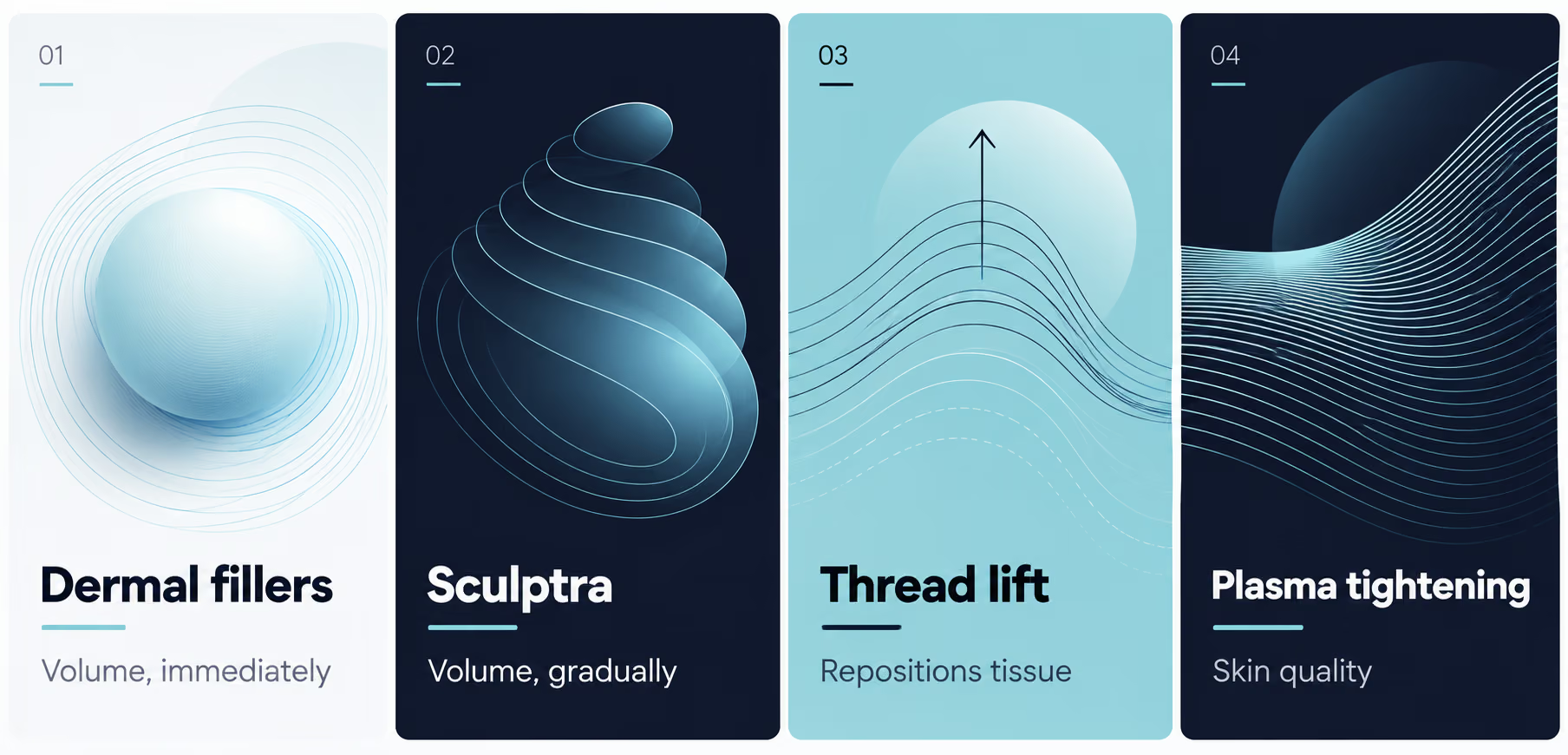
Restoring volume where it was lost. This is usually the first move, and it is counterintuitive, because the treatment happens well above the area that bothers you. Rebuilding support in the cheeks and midface lifts the tissue that has descended, which softens the jowl indirectly.
Dermal fillers do this immediately. A firmer, more structural hyaluronic acid product placed in the midface restores projection where the fat pad has thinned. It is precise and it is reversible, which matters when treating a structural area for the first time.
Sculptra does the same job differently, by stimulating your own collagen across a broader area over several months. It suits widespread, gradual volume loss rather than one defined spot, and its effect is more diffuse, which is often what the midface needs. Results build from about six to eight weeks and typically last two years or more.
Defining the jaw itself. Filler placed along the jawline and chin sharpens the border, and a defined edge makes the jowl less conspicuous even when the jowl itself is unchanged. Our jawline filler guide covers that treatment specifically.
Repositioning the tissue. A thread lift works mechanically. Absorbable threads are placed under the skin and used to lift and reposition soft tissue, with some collagen stimulation along the thread as it dissolves. Of everything available without surgery, this is the option that most directly addresses descent rather than volume. It suits mild to moderate jowling with reasonable skin quality, and the effect is temporary. Our thread lift guide covers what treatment and recovery involve.
Improving the skin over it. Plexr Plus tightens lax skin on the face and neck. This is a skin quality treatment, not a lifting treatment, and it is worth being clear about the distinction: it will not raise descended tissue. Where skin laxity is genuinely the main issue along the jawline, it can help. Plexr treatment for the marionette area is $800.
Most plans combine two of these, typically volume restoration first and something else afterward once the base has been rebuilt.
What Does Not Help as Much as Advertised
Skin tightening alone. Covered above, and worth repeating because it is the most common mismatch between expectation and result.
Facial exercises. Popular in search results. There is no good evidence they lift descended fat pads. Muscle is not the tissue that has moved.
Creams. No topical product reaches the fat compartments or ligaments. Good skincare and daily sun protection are genuinely worth doing for skin quality and for slowing further change, but they are prevention, not correction.
Weight loss. It can improve fullness in the lower face, and it can also make jowling more obvious, because losing facial fat removes support. This catches people out.
The Devices You Will Read About Elsewhere
Most articles on jowls are built around a device. The usual names are Ultherapy, Sofwave, Morpheus8, Thermage, FaceTite, and EMFace, which use ultrasound, radiofrequency, or microneedling to tighten tissue.
Arlo Medical does not offer any of them. We are an injectable and plasma clinic, and the treatments described above are what we actually provide. If one of those devices is the right answer for you, you should have it somewhere that owns one and uses it often.
We mention them because you will encounter them while researching, and because a list of everything a clinic does not have is more useful than a list of everything it wants to sell you.
When the Honest Answer Is Surgery
Non-surgical treatment works on mild to moderate jowling. It does not match what a lower facelift achieves, and no combination of injectables will.
A surgical opinion is likely the better path if the jowl is pronounced and hangs distinctly below the jawline, if there is significant loose skin rather than mainly volume loss, if there is substantial laxity extending into the neck, or if you have already had volume restoration and are still unhappy.
If that is what the assessment shows, we will tell you and suggest seeing a plastic surgeon. That is a normal outcome of a consultation, not a failed one. Spending money on injectables that cannot reach the problem is a worse result than being told early.
What to Expect, Realistically
Improvement is usually a softening rather than an elimination. The jawline becomes cleaner and the shadow less pronounced. Comparing photographs taken in the same lighting at the same angle is the only reliable way to judge it, because the change is gradual and the face you see every day resets your baseline.
Timelines differ by approach. Filler shows a change immediately with final results at around two weeks. Sculptra begins showing at six to eight weeks and continues for months. A thread lift gives an immediate lift that settles over the following weeks. Plasma skin tightening builds over eight to twelve weeks as collagen forms.
None of it is permanent. Fillers last 6 to 18 months depending on placement, Sculptra two years or more, threads are temporary by design, and aging continues underneath all of it.
Prevention, Honestly
You cannot prevent jowls, because you cannot prevent the bone and fat changes that cause them. You can influence the pace.
Daily sun protection is the single highest-value habit, since UV exposure degrades collagen and elastin. Not smoking matters for the same reason. Avoiding repeated large weight swings helps, since each cycle stretches and empties the same tissue. Starting volume restoration earlier, in smaller amounts, is generally kinder to the face than waiting until the descent is established and then trying to correct it in one go.
Where to Start
If jowls are what brought you here, the useful first step is an assessment of whether your presentation is mainly volume loss, mainly skin laxity, mainly descent, or genuinely surgical. Those four answers lead to four different plans, and no article can tell you which you have.
Book a complimentary consultation and we will look at your face at rest and in movement, explain which of the four is driving it, and tell you honestly what is realistic, including if the answer is a surgical opinion. Results vary from person to person, and suitability is assessed individually.
Frequently Asked Questions
What causes jowls?
Mostly volume loss and descent rather than loose skin. Fat pads in the cheek and midface shrink and shift downward as the ligaments holding them loosen, the jawbone loses some height and projection, and skin loses elasticity. All four contribute, and skin is usually the smallest factor.
Can fillers get rid of jowls?
Fillers can soften jowls but rarely eliminate them. The most effective approach is usually restoring volume higher in the face, in the cheeks and midface, so the tissue below has support again, and defining the jawline so the border reads more cleanly. Treating the jowl directly with filler is not typically the answer.
Can you fix jowls without surgery?
Mild to moderate jowling usually improves with a combination of volume restoration, jawline definition, and sometimes a thread lift. Pronounced jowling with significant loose skin does not respond well to non-surgical treatment, and a lower facelift is the honest comparison. An assessment will tell you which category you are in.
Do facial exercises help jowls?
There is no good evidence that they do. Jowls form because fat compartments descend and bone support diminishes, not because muscles are weak. Exercises do not lift descended tissue.
What about Botox for jowls?
Using neuromodulators to contour the lower face is not an approach we offer, and it is not something we advertise. If you are asking about it, bring it to a consultation and we will talk through what is appropriate for your anatomy.
Does Arlo offer Ultherapy or Morpheus8 for jowls?
No. We do not have those devices, or Sofwave, Thermage, FaceTite, or EMFace. We treat jowls with dermal fillers, Sculptra, thread lifts, and plasma skin tightening. If a device-based treatment is the better fit for you, we will say so.
At what age do jowls start?
It varies widely. Many people notice early changes in their forties, but facial structure and genetics mean some see it in their thirties and others much later. Early, subtle jowling is generally easier to improve than established jowling.
Related Reading
Last Updated:
October 8, 2026
Ready to Discuss Your Botox Treatment?
Book a consultation at our Calgary location to get a personalized treatment plan. Every face is different and yours deserves an approach that's tailored specifically to you.