Dermal Filler Aftercare: What to Do, What to Avoid, and What Is Normal
Most of what people worry about after filler is completely normal. Here is how to tell the difference, and the few things that genuinely need a phone call.
October 1, 2026
Quick answer: For the first 48 hours after dermal filler, avoid strenuous exercise, alcohol, saunas and hot yoga, facials and massage, and sleeping face-down. Swelling, mild bruising, tenderness, and small firm lumps are all normal early on and typically settle within one to two weeks. Contact your clinic promptly if you develop severe or increasing pain, skin that turns white, grey, or mottled, vision changes, or signs of infection. Those are uncommon but need same-day attention.
The treatment itself takes about twenty minutes. The two weeks afterward are where most of the anxiety lives.
Almost everything people panic about after dermal filler is normal and temporary. But because nobody remembers the aftercare sheet at 10pm when one side looks bigger than the other, it is worth having the whole picture written down.
One note before anything else: this is general guidance, and it does not replace the instructions your own injector gave you. Aftercare varies depending on the product used, the area treated, how much was placed, and your own medical history. If our advice here differs from what your clinic told you, follow your clinic.
If your appointment has not happened yet, start with our guide to preparing for dermal filler. What you do in the two weeks beforehand decides a lot of the bruising covered below.
The first 24 to 48 hours: what to avoid
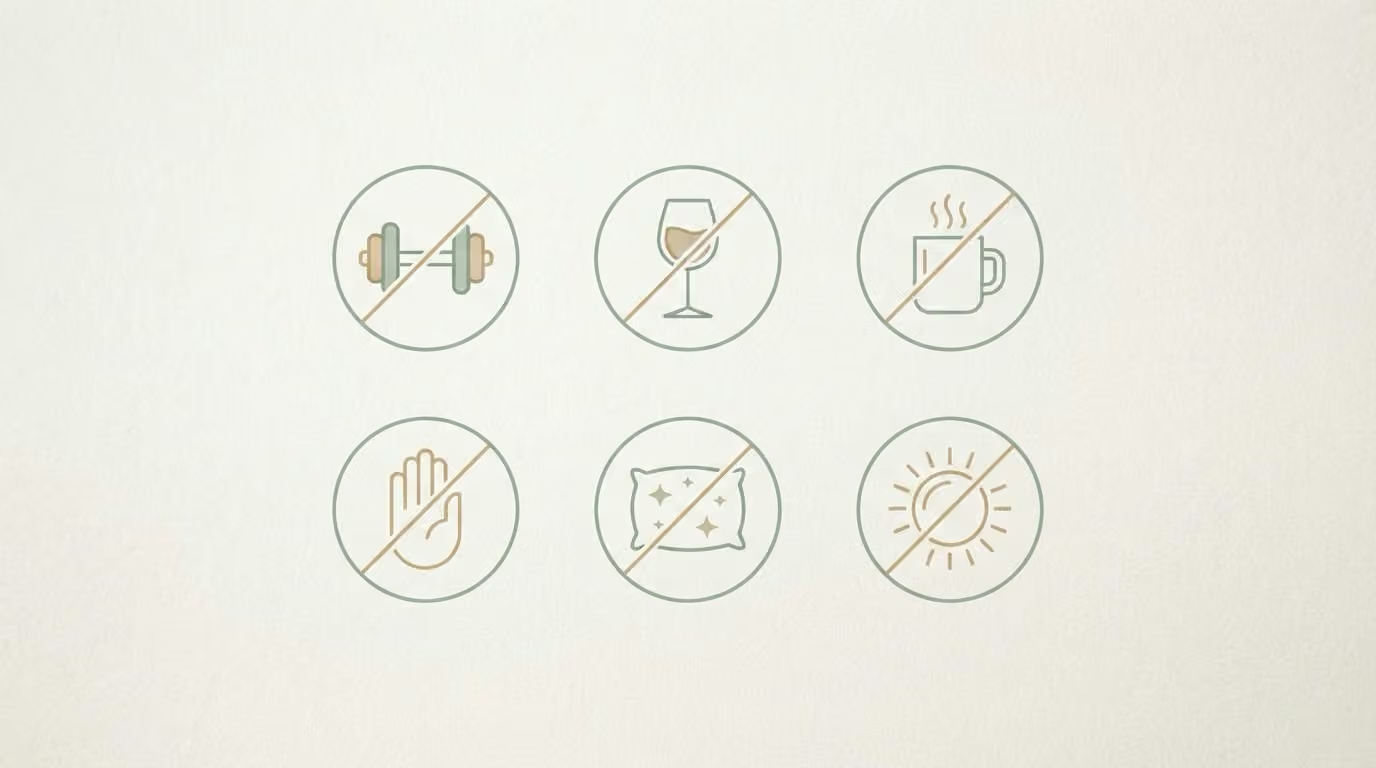
The goal in the first couple of days is straightforward. Do not increase blood flow to the area, and do not put pressure on it while the filler settles.
Skip strenuous exercise for 24 to 48 hours. Elevated heart rate and blood pressure increase swelling and bruising. Gentle walking is fine. Heavy lifting, running, and high-intensity classes can wait.
Avoid alcohol for at least 24 hours. Alcohol dilates blood vessels and thins the blood, which makes bruising more likely and more pronounced. Worth avoiding the day before as well.
Stay out of saunas, steam rooms, hot tubs, and hot yoga for 48 hours. Heat increases swelling substantially.
No facials, massage, microdermabrasion, or laser treatment on the area for two weeks. Physical manipulation can move product before it has integrated.
Try to sleep on your back for the first night or two. Pressure from a pillow on freshly placed filler is worth avoiding, particularly with cheek or under-eye treatment.
Leave it alone. Do not press, poke, or massage the area unless your injector specifically told you to. Some techniques and products do call for gentle massage, but that instruction has to come from the person who treated you.
Be careful with painkillers. Some over-the-counter analgesics affect clotting and can worsen bruising. Ask your injector which they recommend rather than reaching for whatever is in the cupboard.
What is completely normal
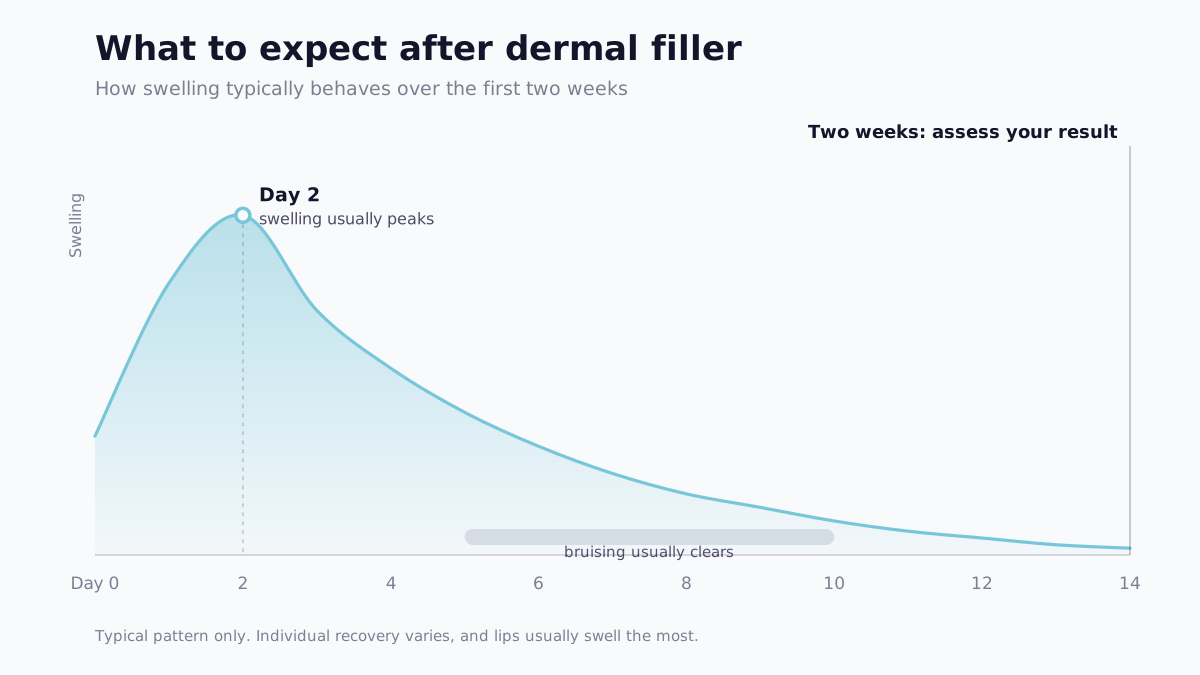
Swelling. Expect it, particularly in the first 24 to 72 hours, and expect it to peak on day two rather than the day of treatment. Lips swell the most dramatically of any area, sometimes alarmingly so, and it is temporary. Under-eyes can also hold fluid for longer than people expect.
Asymmetry in the first two weeks. This is the one that causes the most worry. Swelling is very rarely even, so one side genuinely can look different from the other for a week or more. Judging your result before the two-week mark is not useful.
Bruising. Common, especially around the lips and under the eyes, where the skin is thin and vascular. Usually resolves over five to ten days. Arnica or a cold compress may help, and makeup can be applied after 24 hours if the skin is intact.
Small firm lumps or unevenness. Very common early on, as the product has not yet integrated with the surrounding tissue and swelling distorts the contour. Most resolve on their own within a couple of weeks.
Tenderness at injection points. Normal for a few days.
Feeling the filler when you press on it. Common in some areas, particularly lips, and usually settles as the product softens and integrates.
When to actually call the clinic
These are uncommon, and they are the reason it matters that you know what to look for. Contact your clinic the same day if you notice:
- Pain that is severe, or pain that is getting worse rather than better. Discomfort should decline steadily. Escalating pain is not expected.
- Skin that turns white, pale, grey, dusky, or develops a blotchy, mottled, net-like pattern. This can indicate that filler has compromised blood supply to the area, known as a vascular occlusion. It needs treatment promptly, and the sooner it is addressed the better the outcome. Clinics prepared for this keep hyaluronidase on hand, the enzyme that dissolves hyaluronic acid filler.
- Any change in vision, including blurring or visual loss. Rare and urgent. Seek immediate medical attention.
- Increasing redness, heat, spreading swelling after the first few days, pus, or fever. Possible infection.
- Firm lumps that appear weeks or months later, which can occasionally represent a nodule needing assessment.
We published a detailed account of a suspected vascular occlusion managed at our clinic because we think patients are better served by understanding how these situations are handled than by being told they never occur. Read it if you want to see what recognition and management actually look like.
None of this should make you nervous about filler. It should make you confident about knowing when to pick up the phone, which is the point.
Area-specific notes
Lips. The most swelling of any area, peaking around 24 to 48 hours and sometimes looking significantly overdone at that stage. Almost always settles considerably by day three or four. Cold compresses help. If you have a history of cold sores, tell your injector beforehand, as treatment can trigger an outbreak and this may be worth managing in advance. More on the treatment itself in our lip filler guide and on thin lips.
Under-eyes. Tear trough treatment is the area most prone to prolonged swelling and visible bruising, since the skin is thin and the area holds fluid readily. Sleeping slightly elevated and reducing salt intake for a few days can help. Our tear trough guide covers the treatment in detail.
Cheeks and jawline. Generally the most comfortable recovery. Watch for pressure while sleeping and expect contour to refine over two weeks as swelling resolves.
Chin. Straightforward recovery, occasional tenderness with jaw movement for a day or two.
The two-week rule
Do not assess your result, book a top-up, or make any judgment about symmetry until two weeks have passed.
By then swelling has resolved, the product has integrated and softened, and you are looking at your actual result rather than a temporarily inflated version of it. If something still looks uneven at the two-week review, that is the right time to raise it, and it is usually straightforward to address.
Once settled, how long the filler lasts depends heavily on the area treated and the product used. If you are curious about a collagen-stimulating approach rather than immediate volume, Sculptra works on a different timeline entirely.
The short version
Be boring for two days. Expect swelling, bruising, and asymmetry for two weeks. Know the handful of signs that warrant a same-day call. And follow the specific instructions your injector gave you over anything you read online, including this.
Treated with us and unsure about something? Get in touch and we will take a look. We would always rather answer a question that turns out to be nothing than have you sitting at home worrying about it.
Frequently asked questions
How long does swelling last after dermal filler?
Most swelling peaks around 24 to 48 hours after treatment and substantially resolves within one to two weeks. Lips swell the most noticeably and under-eye treatment can hold fluid for longer. Final results are best assessed at the two-week mark.
Can I exercise after getting fillers?
Avoid strenuous exercise for 24 to 48 hours, since raised heart rate and blood pressure increase swelling and bruising. Gentle walking is generally fine. Follow the specific timeframe your injector gave you.
Is it normal to feel lumps after filler?
Small firm lumps and slight unevenness are common in the first one to two weeks while the product integrates with surrounding tissue and swelling distorts the contour. Most resolve on their own. Firm lumps that appear weeks or months later should be assessed by your injector.
Why does one side look bigger than the other after filler?
Swelling is rarely symmetrical, so temporary asymmetry in the first two weeks is common and usually not a reflection of the final result. Wait until swelling has fully resolved at around two weeks before assessing symmetry or considering any adjustment.
What are the warning signs of a complication after filler?
Contact your clinic the same day if you experience severe or worsening pain, skin that turns white, grey, dusky, or mottled, increasing redness with heat or pus, or fever. Any change in vision requires immediate medical attention. These are uncommon but need prompt assessment.
Can I drink alcohol after dermal filler?
It is best avoided for at least 24 hours afterward, and ideally the day before as well. Alcohol dilates blood vessels and thins the blood, which increases the likelihood and severity of bruising.
When can I wear makeup after filler?
Generally after 24 hours, provided the skin is intact and there is no bleeding at the injection sites. Apply gently without pressing or dragging over the treated area, and confirm the timing with your injector.
Last Updated:
September 27, 2026



Ready to Discuss Your Botox Treatment?
Book a consultation at our Calgary location to get a personalized treatment plan. Every face is different and yours deserves an approach that's tailored specifically to you.